The obvious read of this frame is a woman at a Pride event showing something on her phone to the man beside her. That is what is happening. It is not what the photograph is about.
Look at the lenses.
The mirrored aviators are doing what mirrored aviators always do at outdoor events — pulling in everything the wearer is technically facing away from. In this case, a rainbow Pride flag, vivid and perfectly centered in the glass. She is looking at her phone. Her sunglasses are looking at the parade. The photograph holds both versions of the moment simultaneously, which is more than most street frames manage.
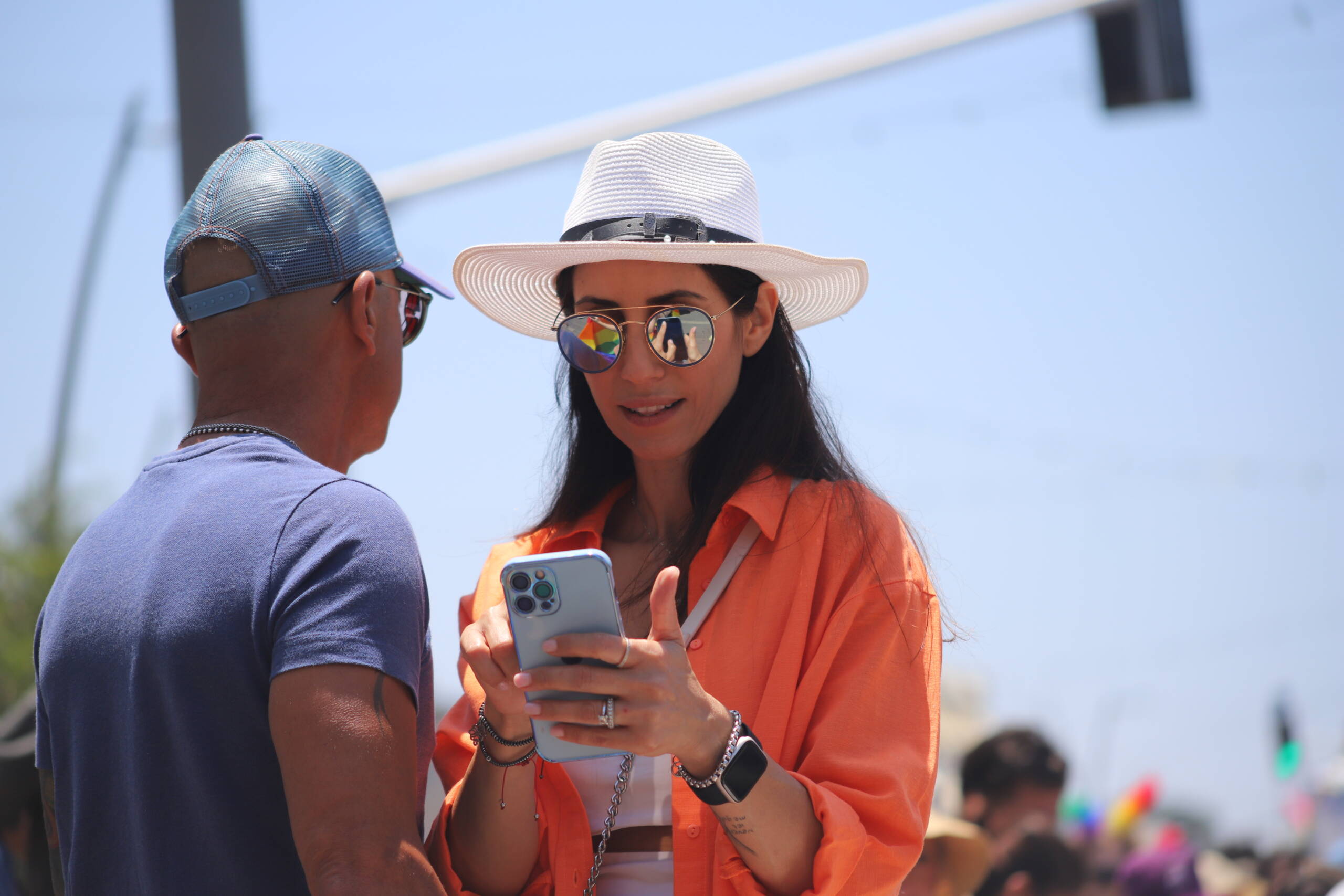
This is the thing about reflective surfaces in street work. They are not a trick. They are a second camera built into the scene, pointed in a direction you did not choose, recording something you were not watching for. You find it in the edit, usually. You were aiming at the gesture, the expression, the light. The glasses were aiming at the flag.
The light here is brutal — dead overhead, high summer, the sky blown to white. There is nothing flattering about it. What it does do is make the colors land hard. The orange shirt. The rainbow in the lens. The blue of his cap. None of that pops in soft golden hour the way it does under this kind of assault. Harsh light gets a bad reputation it only partially deserves.
The flag in the glass is also the quieter political geometry of the image. He cannot see it. She is not showing it to him. It is just there, in her eyeline, held in the frame of her own face. That is enough.
Leave a Reply