A good Lightroom preset is not the one that produces the most dramatic before-and-after screenshot in an ad. It is the one that survives contact with real photography. That sounds obvious, maybe almost too obvious, but it cuts straight through the way presets are usually sold and misunderstood. Most preset packs are built to impress on a single hero image under a very specific light: clean golden hour, flattering skin, tidy color separation, controlled contrast. Real shoots are rarely that cooperative. Light shifts. White balance drifts. Shadows open and close from frame to frame. One image in a sequence might be backlit and airy, the next heavy and blue, the next full of mixed practical lighting. A preset that is actually good does not force every file into one rigid finish. It nudges the image in a direction. That is the real difference. It provides a visual bias, a tonal instinct, a color philosophy. It does not pretend every photograph should end in the same exact place.
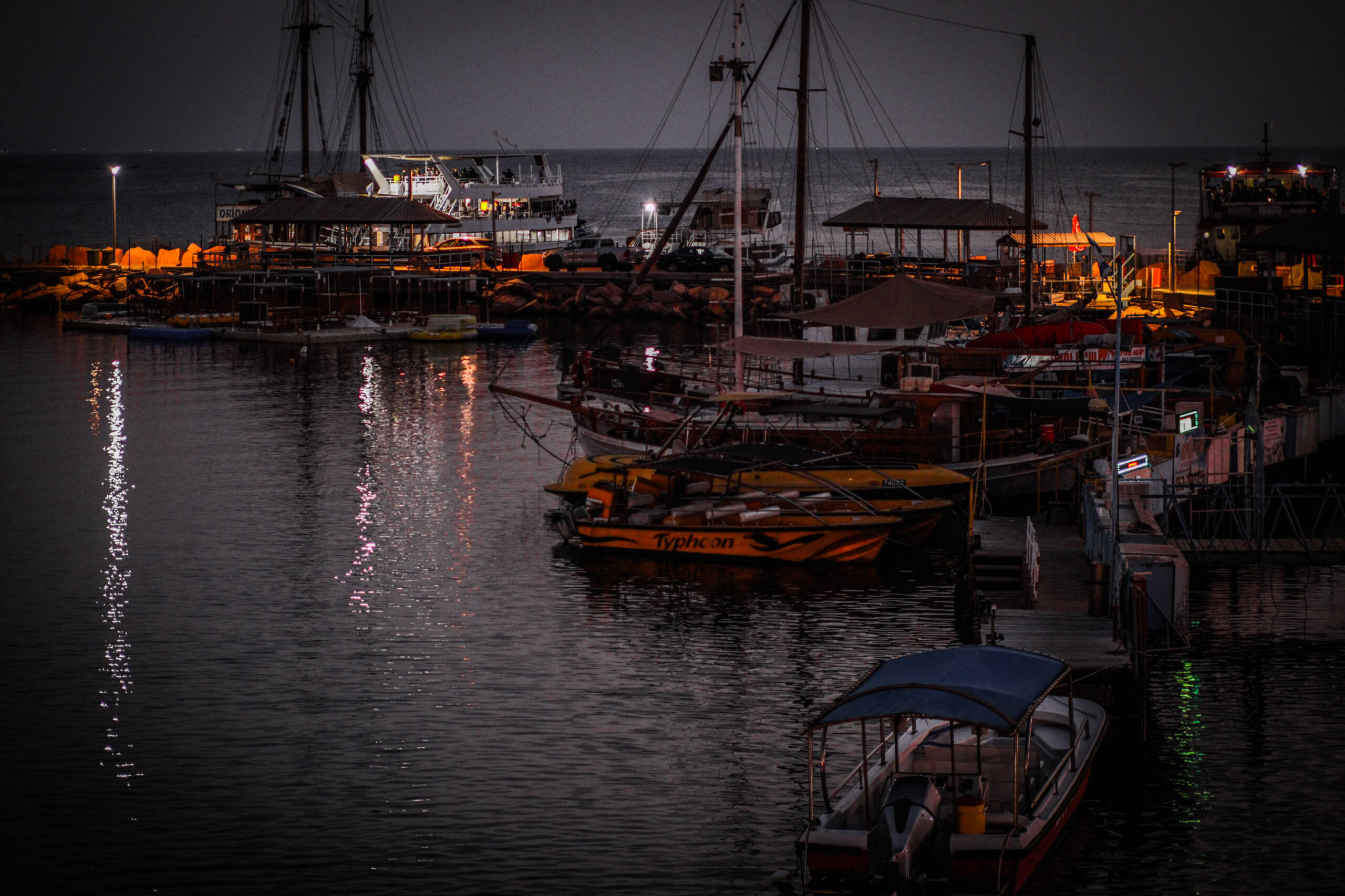
You can feel that difference most clearly in a moody scene like the harbor image here. It is a night waterfront photograph with deep blue-black water, marina structures, moored boats, and a low horizon where the sea nearly merges with the sky. Warm artificial lights skim across the docks and boats, breaking the darkness with amber pools and thin vertical reflections that tremble on the water. The brightest elements are not large at all, just scattered points of illumination: a ferry or tour boat lit in the middle distance, a few dock lamps, a glowing sign, cabin lights, a tiny green reflection at the far right. In the foreground, a covered small boat rests in shadow, while farther back a yellow speedboat with “Typhoon” painted on its side catches enough warm light to become one of the frame’s visual anchors. Around it, masts, rigging, canopies, rails, and dock geometry create a dense web of fine detail, but none of it screams for attention. The image works because the darkness is allowed to remain dark. A bad preset would panic here. It would lift blacks too aggressively, flatten the night, over-clarify the reflections, push orange saturation until the harbor looked radioactive, and try to manufacture “cinematic” mood by crushing or tinting everything with a heavy hand. A good preset would understand the image’s actual gift: subtle separation inside low light, gentle color contrast between cool water and warm dock lighting, and a sense of atmosphere that depends on not explaining every shadow.
That is why the technical signs of a strong preset are surprisingly unflashy. The tone curve should shape contrast relationships, not just slam the whole frame brighter or darker. HSL adjustments should target colors with enough precision that warm dock lights can glow without contaminating nearby neutrals, and blues in the water can deepen without making the whole frame feel synthetic. Calibration adjustments, when used, should serve a deliberate color response rather than act like a secret sauce dumped in at the end. Highlight recovery and shadow lifting need restraint, because the image-specific work still has to happen afterward. In a harbor scene like this one, for instance, you might want to preserve the darkness in the lower water and foreground while recovering just enough detail around the docked boats to keep the composition legible. If the preset has already maxed out shadows or hammered highlights into a canned look, your editing room is gone before you even begin. That is the real sin of many presets: not that they are stylized, but that they leave no room to think.
The presets that age well in a photographer’s workflow are usually the ones with modest opinions. They may introduce a certain kind of contrast rolloff, a preference for softer greens, denser blues, slightly warmer mids, cleaner reds, whatever the photographer has learned to trust. But they leave exposure alone. They usually leave white balance alone. They do not impose sharpening or noise reduction as if every file came from the same sensor at the same ISO in the same light. That kind of restraint is not laziness; it is respect for the image. In this marina photograph, for example, noise behavior in the darker water and sky matters. The warm practical lights matter. The separation between the black rigging and the night sky matters. If a preset arrives with heavy noise reduction, aggressive texture, and a fixed white balance idea, it is no longer helping interpret the scene. It is replacing the scene with its own assumptions.
That is also why photographers who stay with the craft for a while often drift away from worshipping preset packs and toward building their own. Not because commercial presets are useless, but because good editing becomes personal in a very specific way. Over time, you start noticing what you repeatedly want from a file. Maybe you like shadows that stay rich instead of milky. Maybe you keep cooling the image globally but warming local highlights. Maybe you hate overcooked aqua tones. Maybe you prefer reds that stay earthy rather than glossy. Those repeated decisions become your visual handwriting. A preset, at its best, is just a container for those accumulated preferences. It is less a shortcut than a memory. That is why the best presets in a real library often look almost disappointingly mild when you inspect the sliders. They are not trying to finish the image by themselves. They are setting the table.
So when people ask what makes a Lightroom preset actually good, the answer is not that it creates a look. Plenty of presets create a look. The better question is whether it can carry that look across uncertainty without breaking the photograph underneath. Can it handle a portrait, a street scene, an interior, and a night harbor without turning all of them into the same over-processed object? Can it preserve mood instead of replacing it? Can it give you a coherent starting point while still leaving space for judgment? That is the test, really. Apply, adjust, iterate a little, pull back, push again. The preset should feel like the beginning of your conversation with the image, not the moment the conversation ends.