• Skip to main content
  • Skip to secondary menu
  • Skip to footer

Pixel Effects

Pixel effects. Media gallery. Visual storytelling.

  • Sponsored Post
  • About
    • GDPR
  • Calendar
  • Domain Aftermarket
  • Contact

A City That Forgot the Sky

February 26, 2026 By admin Leave a Comment

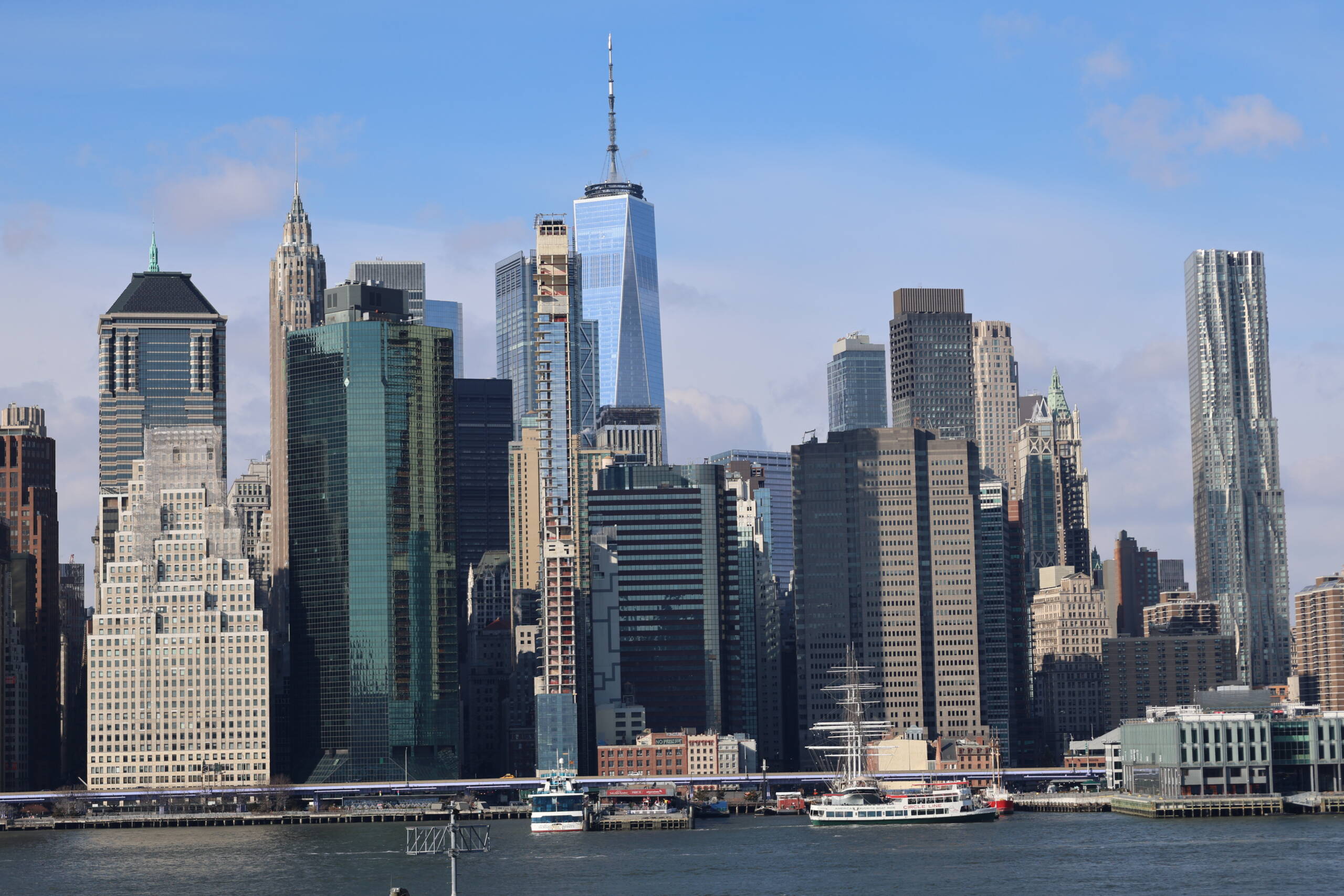
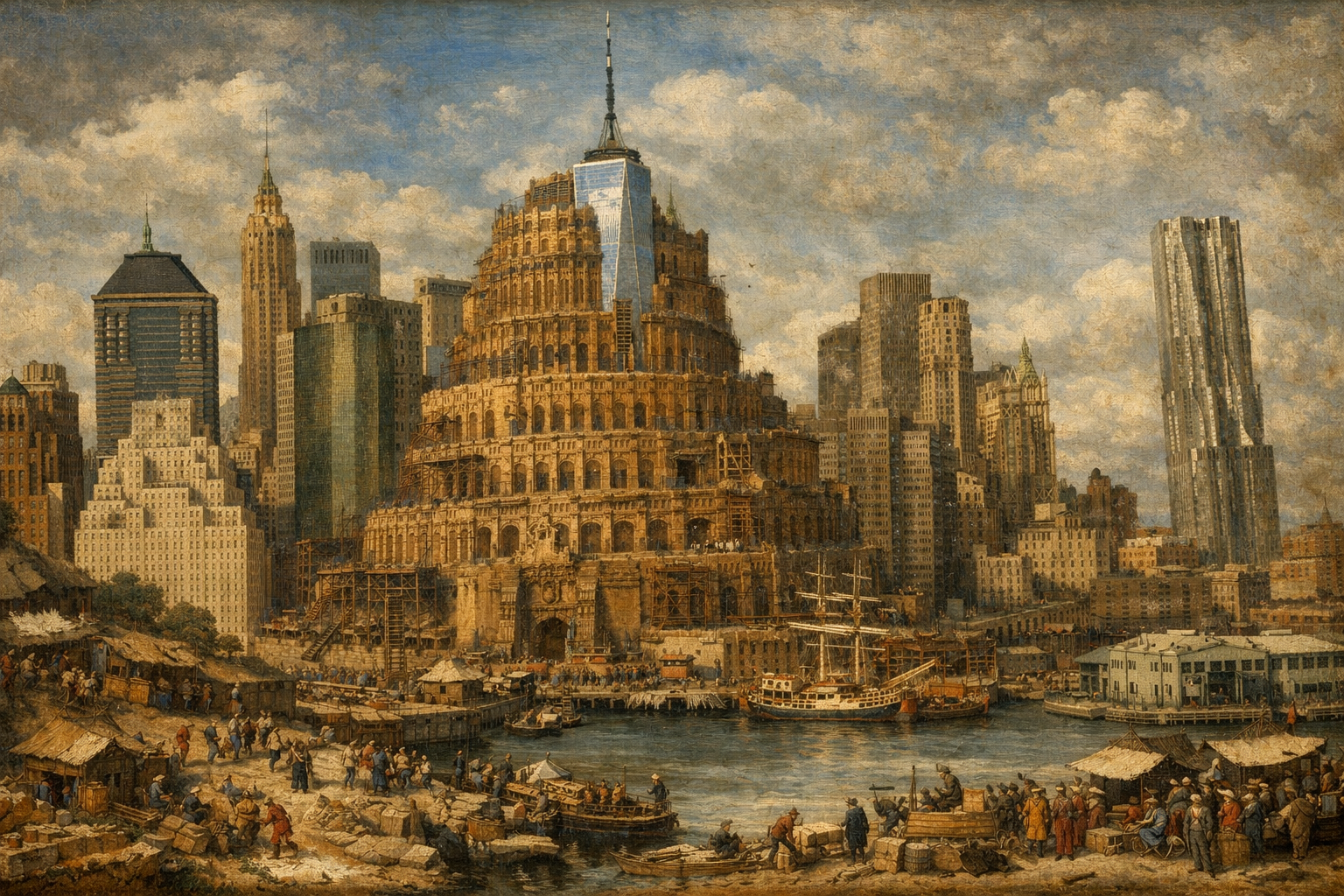
This large-scale painting stages a collision between epochs, placing a contemporary metropolis inside the visual logic of a myth that never really left us. At the center rises a colossal, unfinished tower, spiraling upward with a confidence that feels both triumphant and precarious. Its structure borrows the circular, terraced mass of Bruegel’s Tower of Babel, yet its crown pierces the sky with glass, steel, and a needle-like spire unmistakably drawn from the language of modern skyscrapers. Around it, familiar urban silhouettes cluster tightly together, their facades compressed into a dense architectural chorus, as if the city itself has been pulled inward by the tower’s gravitational ambition. The river in the foreground acts as both stage and witness: boats glide past scaffolding, workers haul stone and timber, and small human figures repeat gestures of labor that feel timeless, almost ritualistic. The palette leans toward warm ochres, muted blues, and weathered greys, giving the entire scene a patina of age, as though this future city has already become an artifact. Nothing here feels frozen; the air is busy, slightly hazy, full of motion and intent, and yet the sky above remains oddly indifferent, expansive, and calm. The painting reads as a quiet but pointed meditation on progress, scale, and human ambition, suggesting that every era rebuilds the same tower with new materials and new names, convinced, once again, that this time it might finally reach the heavens.
A City That Forgot the Sky

A City That Forgot the Sky

The Second Workshop of Babel

The concept begins as a deliberately anachronistic studio, one that treats history, myth, and scripture not as static references but as living visual material. At its core sits an AI image engine trained to remix modern cityscapes, technologies, and social rituals with biblical narratives, ancient epics, and pivotal historical moments. Think of contemporary skylines folded into Genesis scenes, financial districts recast as medieval marketplaces, or modern infrastructure threaded through stories of exile, flood, revelation, and empire. The AI is not positioned as the final author but as a generator of dense visual propositions, rough yet evocative paintings that carry symbolic tension and narrative ambiguity. These digital works function like modern sketches or cartoons once did for Renaissance workshops: starting points charged with ideas, mood, and composition rather than finished objects.

From there, the model deliberately slows down. Selected AI-generated works are handed to ghost artists, trained painters operating anonymously under the umbrella of the studio. Their role is not to replicate pixel for pixel, but to interpret, correct, exaggerate, and humanize the image through physical paint. Brushwork, material resistance, small imperfections, and personal intuition re-enter the process at this stage. Each painting becomes a translation rather than a copy, subtly different from the AI source and from other versions derived from the same prompt. The anonymity of the artists is not a limitation but a conceptual choice, echoing medieval workshops where authorship was collective and the work itself carried the meaning. What matters is continuity of vision rather than signature.

The gallery completes the circuit by functioning as both exhibition space and narrative environment. It is not presented as a traditional white cube, but as a contemporary atelier where process is partially visible and myth-making feels ongoing. Digital previews of the AI originals may be shown alongside finished paintings, not as a gimmick, but as a quiet acknowledgment of layered authorship. The works are sold as physical objects with documented provenance: AI concept, human interpretation, material execution. Collectors are invited not just to buy a painting, but to acquire a fragment of a larger system that reflects how images, beliefs, and power circulate today.

Commercially, the model scales in two directions at once. Digitally, the AI can continuously generate new thematic series tied to current events, urban transformations, or cultural anxieties, keeping the concept relevant and reactive. Physically, production remains limited and controlled, preserving scarcity and craft value. The tension between infinite digital possibility and finite painted output becomes part of the brand’s appeal. Over time, the gallery positions itself less as a place that sells paintings and more as a contemporary myth factory, one that understands that in every era people want to see their present reflected inside older stories, if only to reassure themselves that ambition, confusion, and faith have always looked something like this.

Filed Under: Blog

Reader Interactions

Leave a Reply Cancel reply

Your email address will not be published. Required fields are marked *

Footer

Recent Posts

  • Turning AI Drafts into Real Work: Canva Expands Deep Integration with Anthropic’s Claude Design
  • Adobe Introduces Firefly AI Assistant, Turning Creative Workflows into Conversations
  • What the Sunglasses Saw
  • What Photoshop’s Generative Fill Gets Right and Wrong
  • The Art of the Subtle Edit: When Less Processing Wins
  • How ControlNet Changed AI Image Generation
  • Capture One vs Lightroom: The Real Differences in 2026
  • Why Your AI-Generated Images Look Like AI-Generated Images
  • How to Add Film Grain That Doesn’t Look Digital
  • Luminosity Masking Without the Mysticism

Media Partners

  • Referently.com
  • Briefly.net
  • ESN.net
Sponsored Post
About
Contact
VIX Explained: What the Fear Gauge Actually Measures, How to Read It, and Why It Mean-Reverts
Bitdefender 2026 Global Scam Intelligence Report: One in Seven Consumers Victimized, Finance Fraud Dominates Every Channel
Marvell's Moat Is Connectivity, Not Custom Silicon
60 GHz WiGig Is Not Dead: Here Is Where It Actually Makes Sense
802.11r, 802.11k, 802.11v: The Three Protocols That Make WiFi Roaming Seamless
Mesh WiFi vs Access Points: Which Architecture Is Right for Your Home
What People Actually Build With a Raspberry Pi: Case Studies From the Field
Balerion AI Raises $6 Million to Bring Agentic AI to Mortgage Origination
Live Nation and Ticketmaster Lose the Core Antitrust Fight
Why Prestige Drama Keeps Collapsing in Season Three
The Newsletter Bubble and Who Survives It
Peak TV Is Over — What Comes Next
Why Startup Valuations Haven’t Fully Reset
What the Fed’s Patience Is Actually Signaling
Dollar Dominance: Slow Erosion or Cliff Edge?
The Cloudflare CMS Bet and What It Signals
Why AI Products Keep Looking the Same
The $931 Million Insider Signal the Quantum Bubble Can No Longer Hide
TechSummit.net
Why We Love Orchids
Turning Attention Into Opportunity
Arearea (Joyeusetés), 1892 — Gauguin’s dream of Tahiti as a constructed paradise
Une rue à Paris en mai 1871 — Luce’s memory of a city after rupture
Jean-Léon Gérôme, The Gladiators and the Modern Gaze on Rome, Musée d’Orsay, Paris
Garamendi Blasts Trump’s FY27 Budget as a War Budget Disguised as Fiscal Policy
The Sports Rights Bubble and Where It Breaks
India’s Moment and Why It Keeps Getting Delayed

Media Partners

  • ZGM.org
  • JVQ.net: Just Very Quick
  • k4i.com
Technology, Finance, and Smart City Events: Selected Global Calendar, 2026
Two Signals, One Crisis
House Democrats Urge Mike Johnson to Restore Bipartisan Smithsonian Women’s History Museum Bill
Borders, Memory, and the Future of European Identity
Canon R100 Field Notes: Budget Gear, Real Results
Video Rebirth Secures $80 Million to Industrialize AI Video and Build the Next Layer of Digital Reality
A Brief History of Tea: From Ancient Leaves to a Global Ritual
Photography Workshop by Pho.tography.org — Spring Session
S3H.com Announces Groundbreaking Web Dev Service Launch
With Possible Strike Looming, Day Care Workers Deliver Solidarity Petition but Management Nowhere to Be Found
Valerian for Stress: Weak Evidence, Mild Risk, Oversold Promise
AI’s Next Market Shockwave Is Coming: AMD, Broadcom, and NVIDIA Earnings Are Around the Corner
Quantum Computing’s $931 Million Insider Sell-Off Is the Bubble Warning Wall Street Can’t Ignore
Quantum Stocks Are Starting to Look Like the Next Meme Stock Bubble
Danielle Deadwyler and the Problem of Being the Best Thing in Every Room
EDC Las Vegas 2026: What Attendees Need to Know Before the Weekend
Did Sean Strickland Win?
The Crawford-Mayweather Debate Is a Question Boxing Cannot Answer
2026 Is the New 2016. TikTok Said So and Now It's Everywhere.
A Man with a Gun Ran Through the White House Correspondents' Dinner. The Aftermath Was Predictable.
Long UVIX Into the SpaceX IPO: What Makes a Volatility Position Pay on the Biggest Listing in History
Quantinuum (QNT) Falls Below Its $60 IPO Price as Revenue Shrinks 73%
The KOSPI's 5.5% Friday: Concentration Comes Due as the Semiconductor Trade Reprices
Markets Week Ahead: May CPI on June 10, SpaceX Lists June 12, and the Nvidia Verdict That Waits Until August
May CPI, June 10: Four Reaction Scenarios and the Asymmetry Working Against the Bulls
SpaceX at $1.75 Trillion: The IPO That Reprices the Whole Market
The SOX Fell 10.26% on June 5: Semiconductors Are Unlikely to Round-Trip to the Highs Next Week
Nvidia Clears Memory's Big Three for Vera Rubin HBM4 Supply
Berkshire's $10 Billion Alphabet Buy Is a Signal, Not a Trade: The AI Build-Out Is Just Getting Started
Qualcomm and the AI Infrastructure Boom: A 62% Rally Ahead of the Revenue

Copyright © 2022 PXEF.com