Photoshop's Generative Fill arrived with significant fanfare and has settled into something more nuanced: a genuinely useful tool in specific workflows, and a genuinely limited one in others. The distinction is worth mapping. What it gets right: background extension and scene completion in images where the generated content does not need to be scrutinized at high resolution. … [Read more...] about What Photoshop’s Generative Fill Gets Right and Wrong
post-processing
The Art of the Subtle Edit: When Less Processing Wins
Heavy processing announces itself. The image becomes about the edit rather than the subject, the light, or the moment — and once that shift happens, the viewer is looking at craft rather than content. Sometimes that is the intention. Often it is not. The photographers whose work holds up over time — across genres, across decades — tend to share a characteristic in their … [Read more...] about The Art of the Subtle Edit: When Less Processing Wins
Capture One vs Lightroom: The Real Differences in 2026
The Capture One versus Lightroom comparison has been relitigated continuously for a decade. The gap has narrowed. The meaningful differences that remain are specific enough to be worth stating clearly. Color. Capture One's color engine is genuinely superior for complex color work. The Color Editor, with its skin tone tool and the ability to create selections based on hue, … [Read more...] about Capture One vs Lightroom: The Real Differences in 2026
How to Add Film Grain That Doesn’t Look Digital
Digital grain added in post looks different from film grain, and most photographers can feel the difference even when they cannot articulate exactly why. The reason is structural, and fixing it requires understanding what film grain actually is. Film grain is silver halide crystals that vary in size, distribution, and clumping behavior depending on film stock, ISO, and … [Read more...] about How to Add Film Grain That Doesn’t Look Digital
Luminosity Masking Without the Mysticism
Luminosity masking is one of those techniques that accumulated a mystique disproportionate to its actual complexity. Strip the jargon and the elaborate panel workflows and what remains is a straightforward idea with genuinely powerful applications. A luminosity mask is a selection based on the tonal values in the image itself. Bright areas select themselves; dark areas do not; … [Read more...] about Luminosity Masking Without the Mysticism
Film Emulation in 2026: Which Tools Are Worth Your Time
Film emulation has been a cottage industry in photo editing for over a decade. The tools have gotten significantly better. The conversation about them has not kept pace. The honest starting point: no digital tool fully replicates the look of film because film look is not primarily a color profile — it is a combination of optical characteristics, chemical grain structure, … [Read more...] about Film Emulation in 2026: Which Tools Are Worth Your Time
How to Build a Color Grade That Holds Across Different Lighting Conditions
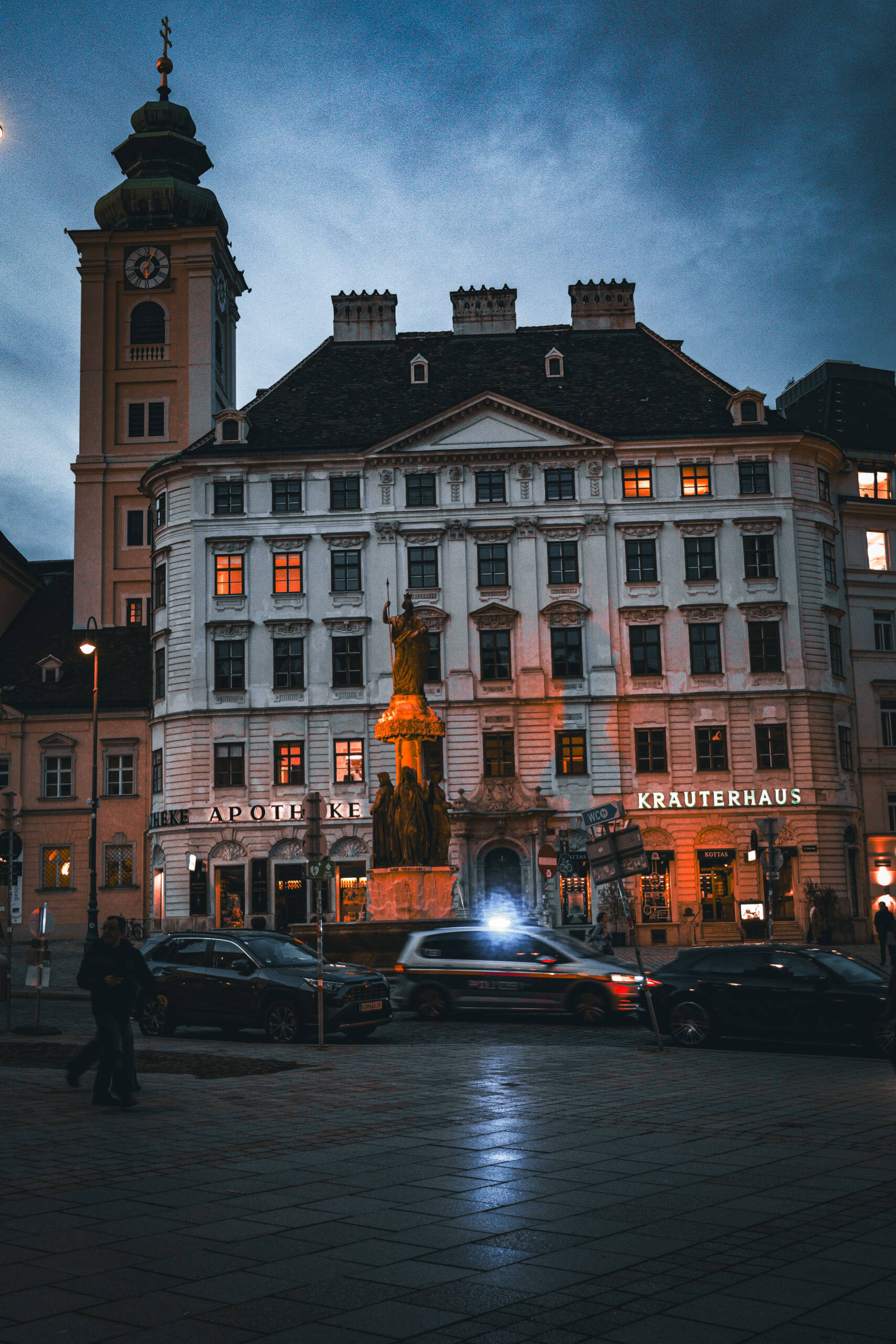
A color grade that works on one image is a lucky accident. A color grade that works across a full shoot in mixed light is a system. Building systems is the actual craft, and you start to see why the moment you look at a scene where everything is working against you at once—deep blue twilight sky, warm artificial lighting spilling from windows, and moving subjects cutting … [Read more...] about How to Build a Color Grade That Holds Across Different Lighting Conditions
What Makes a Lightroom Preset Actually Good

A good Lightroom preset is not the one that produces the most dramatic before-and-after screenshot in an ad. It is the one that survives contact with real photography. That sounds obvious, maybe almost too obvious, but it cuts straight through the way presets are usually sold and misunderstood. Most preset packs are built to impress on a single hero image under a very specific … [Read more...] about What Makes a Lightroom Preset Actually Good