A proper look at this image almost forces you to drag in the long, strange, and genuinely fascinating history of oranges in Coppola’s film language—because he didn’t choose them randomly, and audiences didn’t start reading them as symbols out of thin air. The whole thing began almost accidentally: during The Godfather’s production, the art department used oranges simply because they provided a nice burst of color against the film’s intentionally muted palette. The world of the Corleones is all earth tones, dark wood, black suits, dim interiors—so when an orange rolls across the table, or sits on Vito Corleone’s fruit stand, the eye jumps to it. Over time, that visual pop hardened into a motif: oranges appear right before violence, betrayal, or death. By The Godfather: Part II and Part III, Coppola was leaning into the pattern, turning it into a kind of cinematic inside joke—dark humor delivered through citrus.
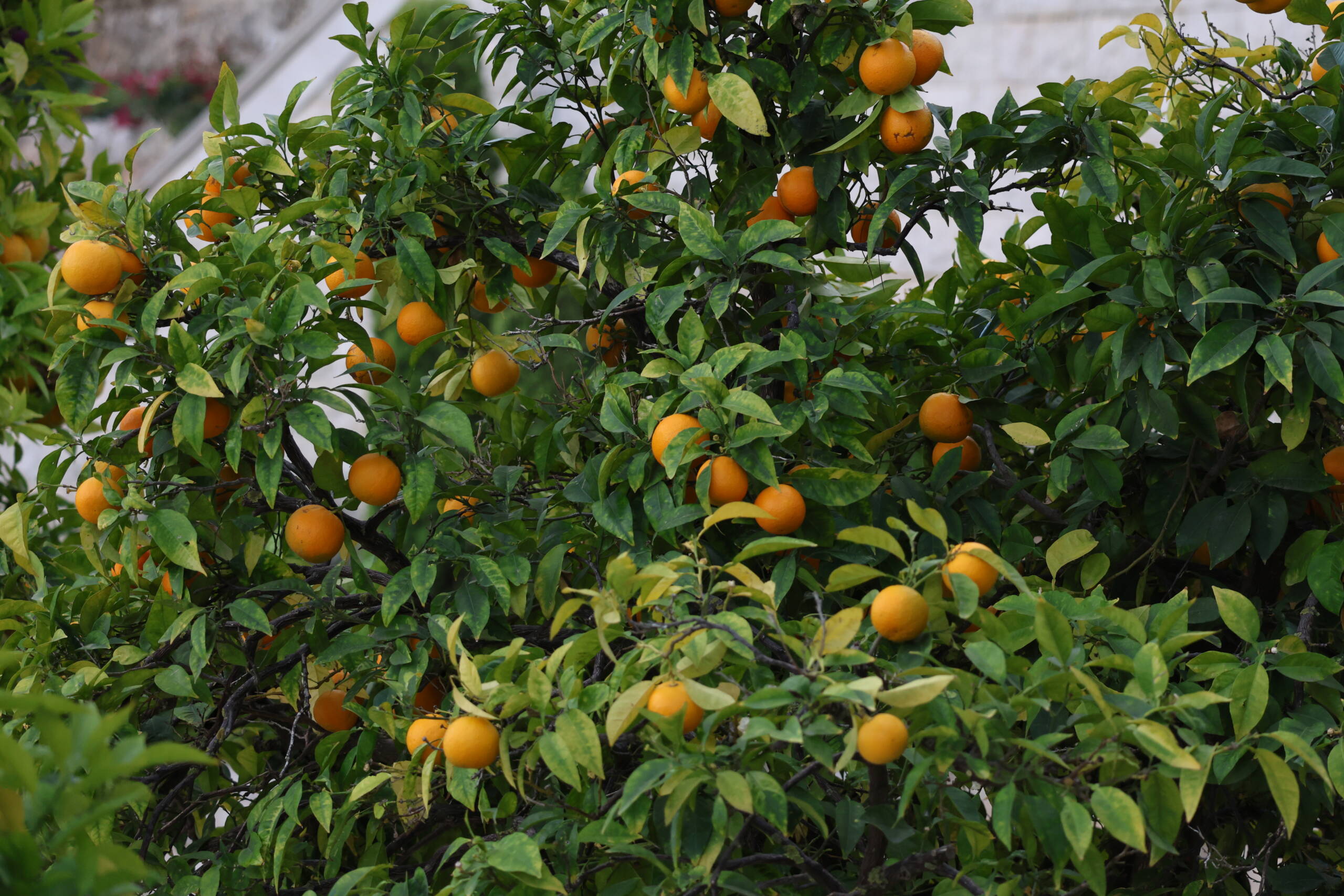
Shot with Canon R100 and a TTArtisan 50mm f/1.2
This is why, when you stand in front of a real orange tree like the one in the photo, heavy with fruit and tangled in dense green, the mind of a film critic starts running through that lexicon. The tree becomes a kind of unintentional storyboard. Those bright, saturated orbs sitting quietly in the foliage echo the way Coppola placed oranges into scenes where characters were being nudged toward their fate. Take Vito Corleone’s assassination attempt: oranges spill across the street as he collapses. Or the meeting with the heads of the Five Families: the table is littered with bowls of citrus. Or Michael in Havana, peeling an orange moments before political chaos erupts around him. These aren’t subtle winks—they’re part of a visual grammar the audience learns to interpret subconsciously.
Looking again at the image, the oranges feel almost too abundant, too vivid, the way they often do in Coppola’s frames: markers of a world where danger is threaded into everyday objects. The tree’s density contributes to the effect—it’s lush but slightly oppressive, the way Godfather interiors are beautiful but suffocating. And there’s that familiar tension between life and death: citrus is a symbol of vitality, juice, sweetness, sunlight… yet under Coppola’s direction, it has become a harbinger of narrative collapse. It’s this contradiction that gives the motif its power. The fruit promises life while announcing loss.
So when a critic reads this scene through Coppola’s lens, the grove transforms from a pastoral moment into something gently foreboding. You can almost imagine a character walking into the frame, brushing past a branch, sending one orange tumbling to the ground with the soft thud that—were this a film—would signal a sharp cut to the next sequence, where the real consequences finally arrive. The photograph, unintentionally or not, inherits all the weight of that cinematic tradition, reminding us how strongly film has conditioned the way we read even the most ordinary pieces of the world.
Leave a Reply