A good travel magazine needs more than postcard views. The most useful image libraries combine famous landmarks, architecture, museums, local culture, food and drink, wildlife, beaches, street life and people. The photographs below are good examples of the range that can be used to build a travel publication: some immediately identify a destination, while others communicate the atmosphere and everyday experience of being there.
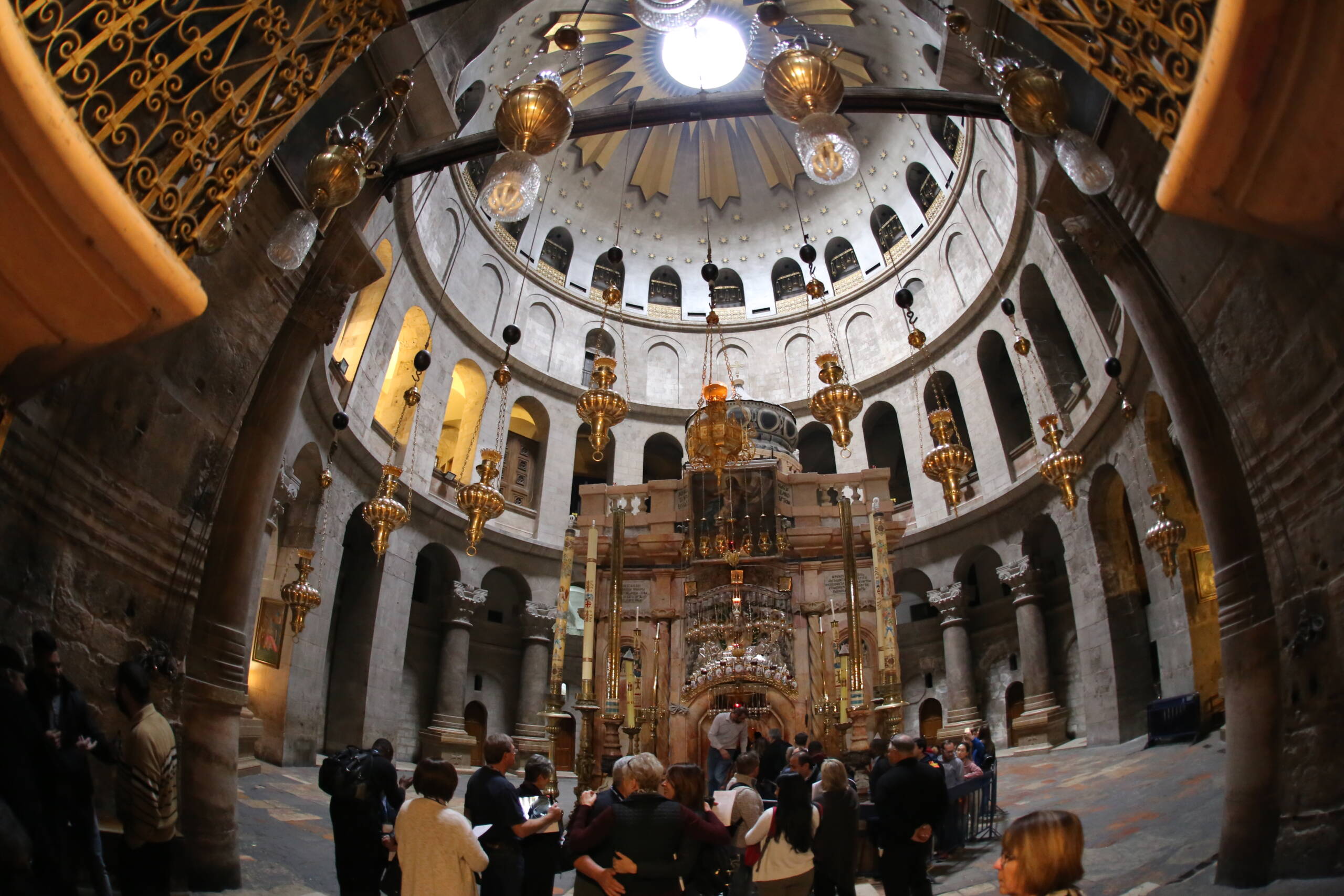
Inside the Church of the Holy Sepulchre, Jerusalem
This wide-angle interior photograph captures the dramatic architecture of the Church of the Holy Sepulchre, with its enormous circular dome, rows of stone arches and columns, hanging lamps and ornate religious furnishings. Visitors gathered around the central shrine give the photograph a strong sense of scale and make it feel like a real travel experience rather than an architectural record. The mixture of warm golden light, dark stone and the crowded interior also makes this particularly effective as a feature image for an article about Jerusalem’s historic and religious sites.
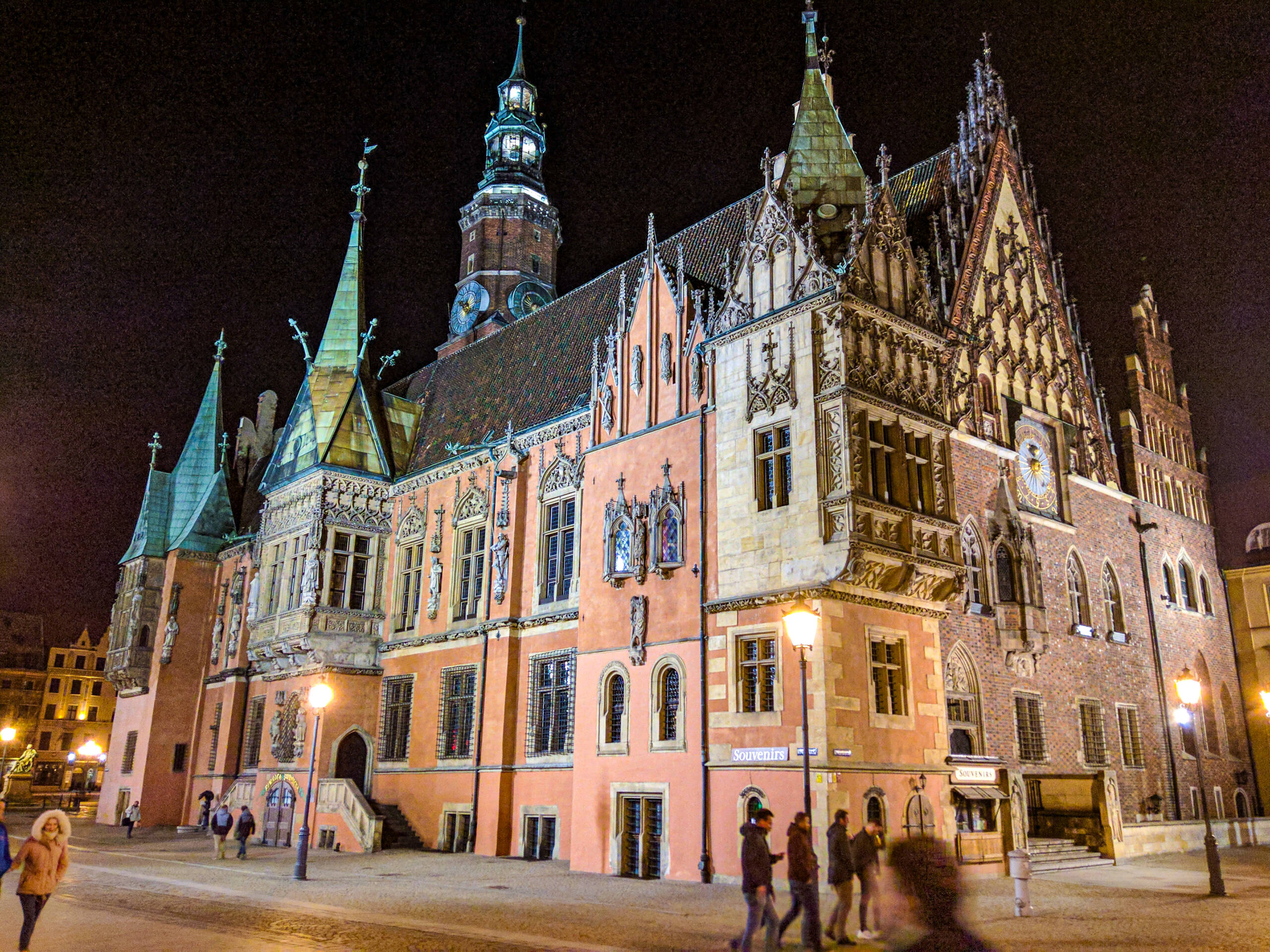
Wrocław’s Old Town Hall at Night
The richly decorated Old Town Hall in Wrocław, Poland, is photographed after dark, when the illuminated Gothic and Renaissance architecture stands out dramatically against the black sky. The numerous towers, steep roofs, decorative stonework and illuminated clock tower make the building immediately recognizable as a historic European city landmark. The pedestrians in the foreground add scale and movement, while the warm street lighting gives the scene an inviting evening atmosphere.
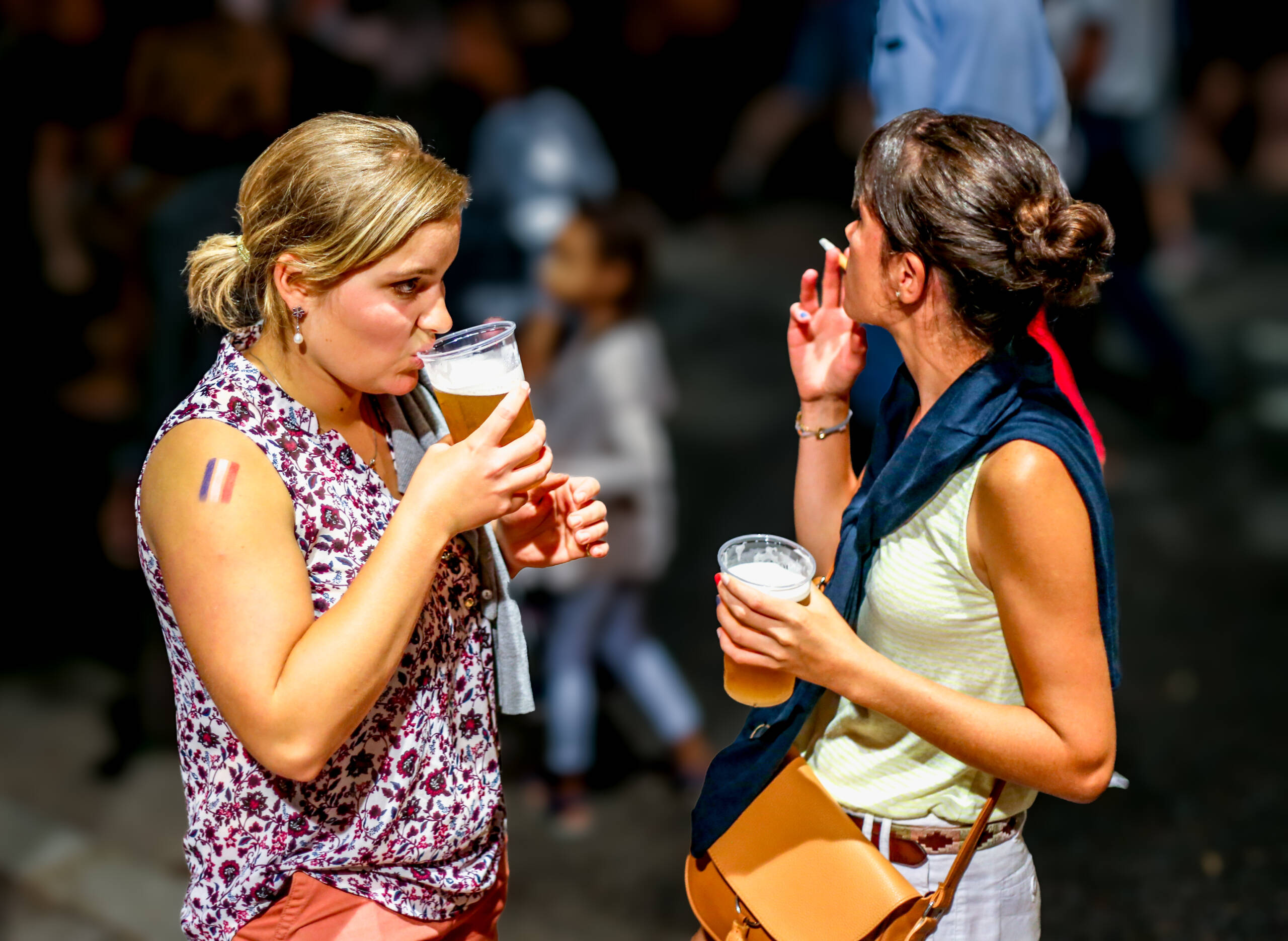
Sharing a Beer at a European Festival
Two women are photographed chatting over beers in a lively outdoor setting, with one wearing a small French flag painted on her upper arm. The shallow depth of field isolates the pair from the crowd behind them, turning an ordinary social moment into a strong travel image. It illustrates something important for a travel magazine: destination photography does not always have to show a landmark. People enjoying themselves, local festivals and informal encounters can convey the atmosphere of a place just as effectively.
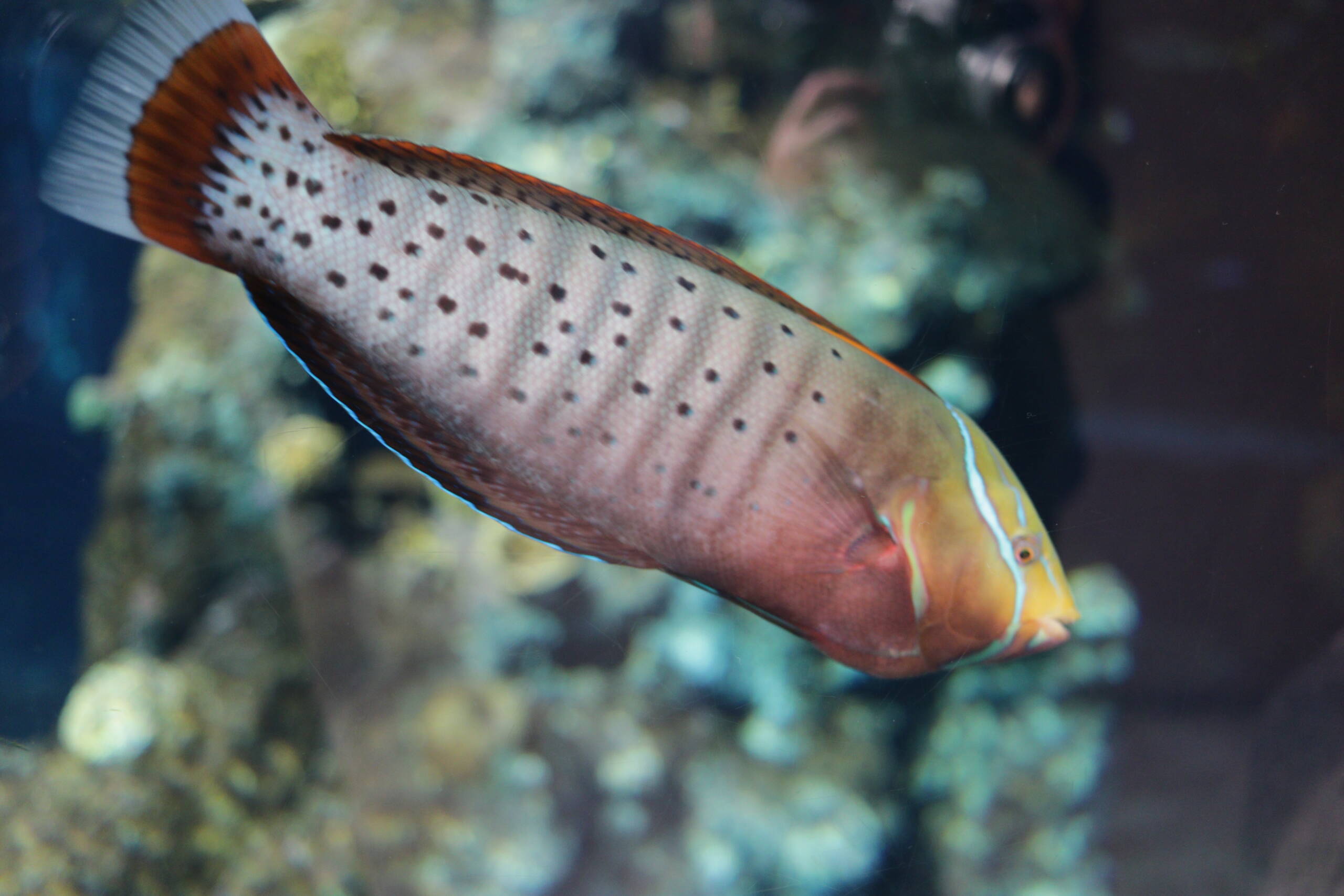
A Spotted Fish in the Aquarium
A colorful spotted fish moves through an aquarium, its elongated body, patterned scales and bright markings sharply visible against the softly blurred underwater background. This is the sort of photograph that can support a travel article about aquariums, marine attractions, coastal destinations or family activities. Close-up wildlife photographs are also useful for breaking up a collection otherwise dominated by architecture and street scenes.
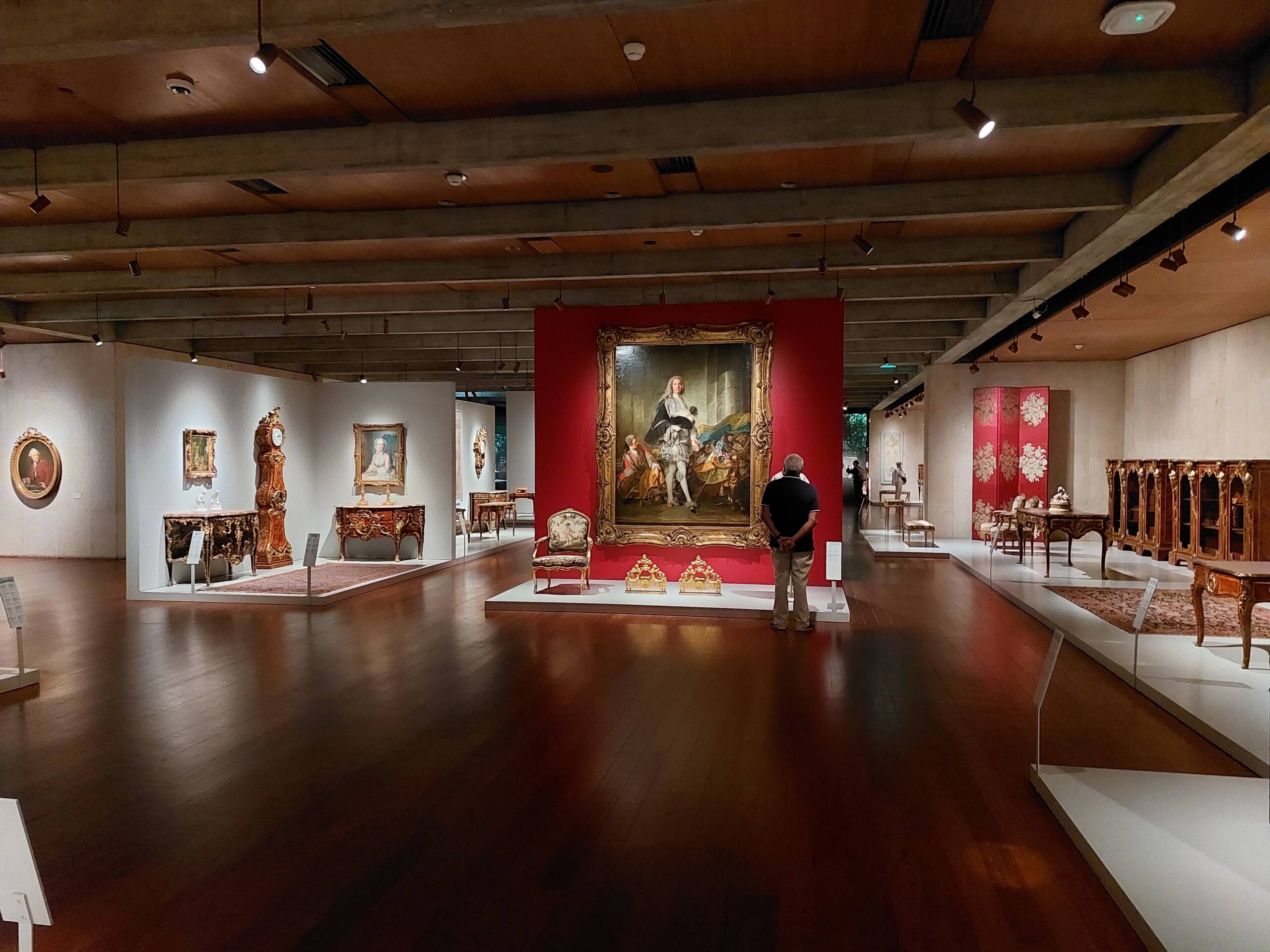
A Grand European Art Museum
The photograph looks across a spacious museum gallery filled with paintings, antique furniture and decorative objects. A large framed portrait dominates the center, surrounded by elaborate cabinets, tables, chairs and other works displayed against white walls and a red feature wall. The wide composition shows the museum as an experience rather than concentrating on a single artwork, making it suitable for travel coverage of museums, cultural attractions and historic interiors.
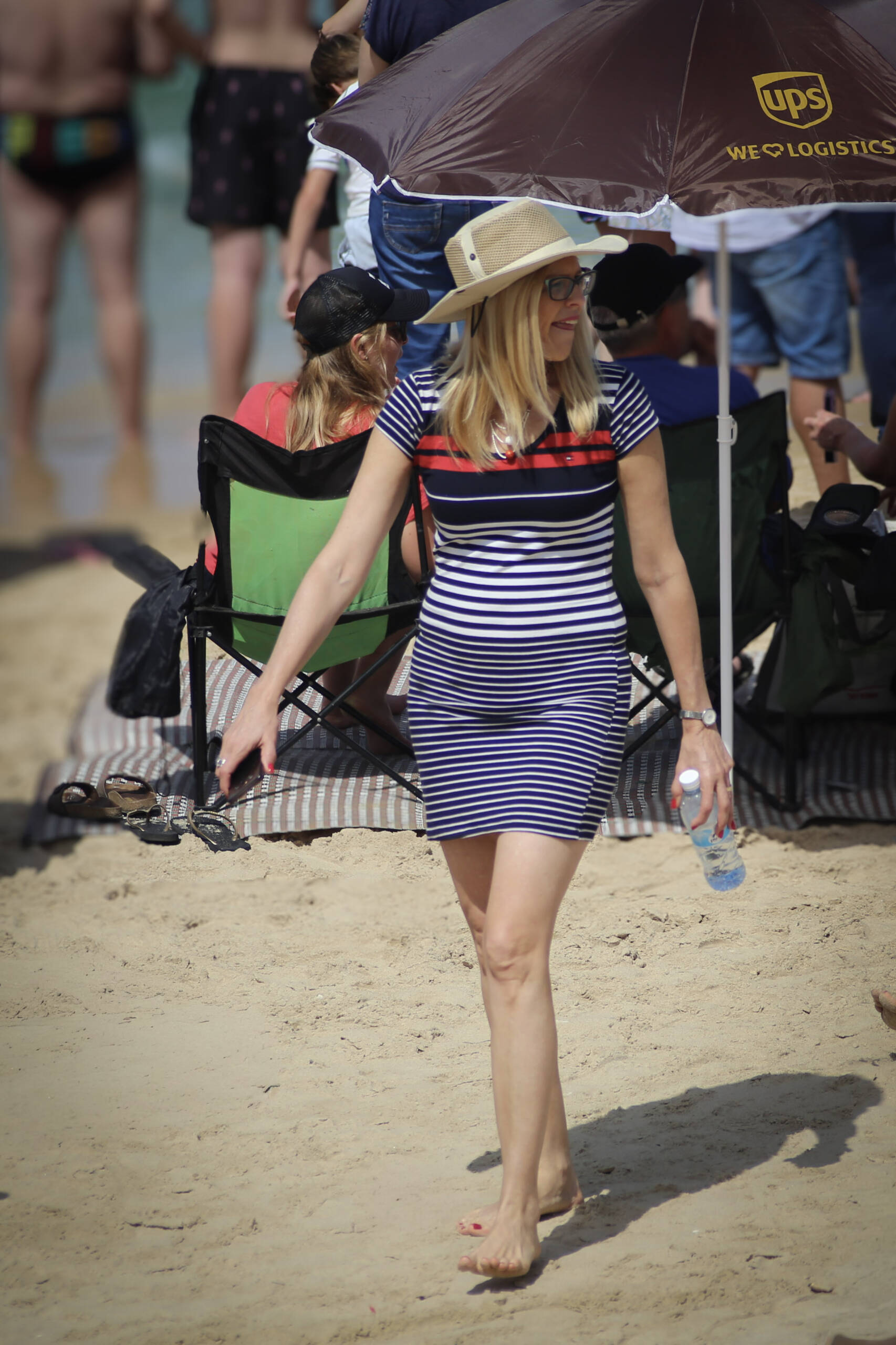
A Day at the Beach
A woman walks across the sand carrying a bottle of water, while beachgoers sit under umbrellas and relax behind her. The prominent UPS umbrella adds an unexpected everyday detail, while the shallow focus keeps attention on the foreground subject. This kind of candid beach photograph can work particularly well in travel magazines because it shows how a destination is actually experienced by visitors, rather than presenting an artificially empty beach.
Morning Exercise Along the Palm-lined Promenade
Two women in athletic clothing walk along a broad paved promenade lined with palm trees, while other people exercise in the background. The combination of palms, urban buildings, pedestrians and recreational activity creates a recognizable Mediterranean or coastal-city atmosphere. It is also a useful example of lifestyle photography: the photograph communicates not only where travelers might go, but what people do there.

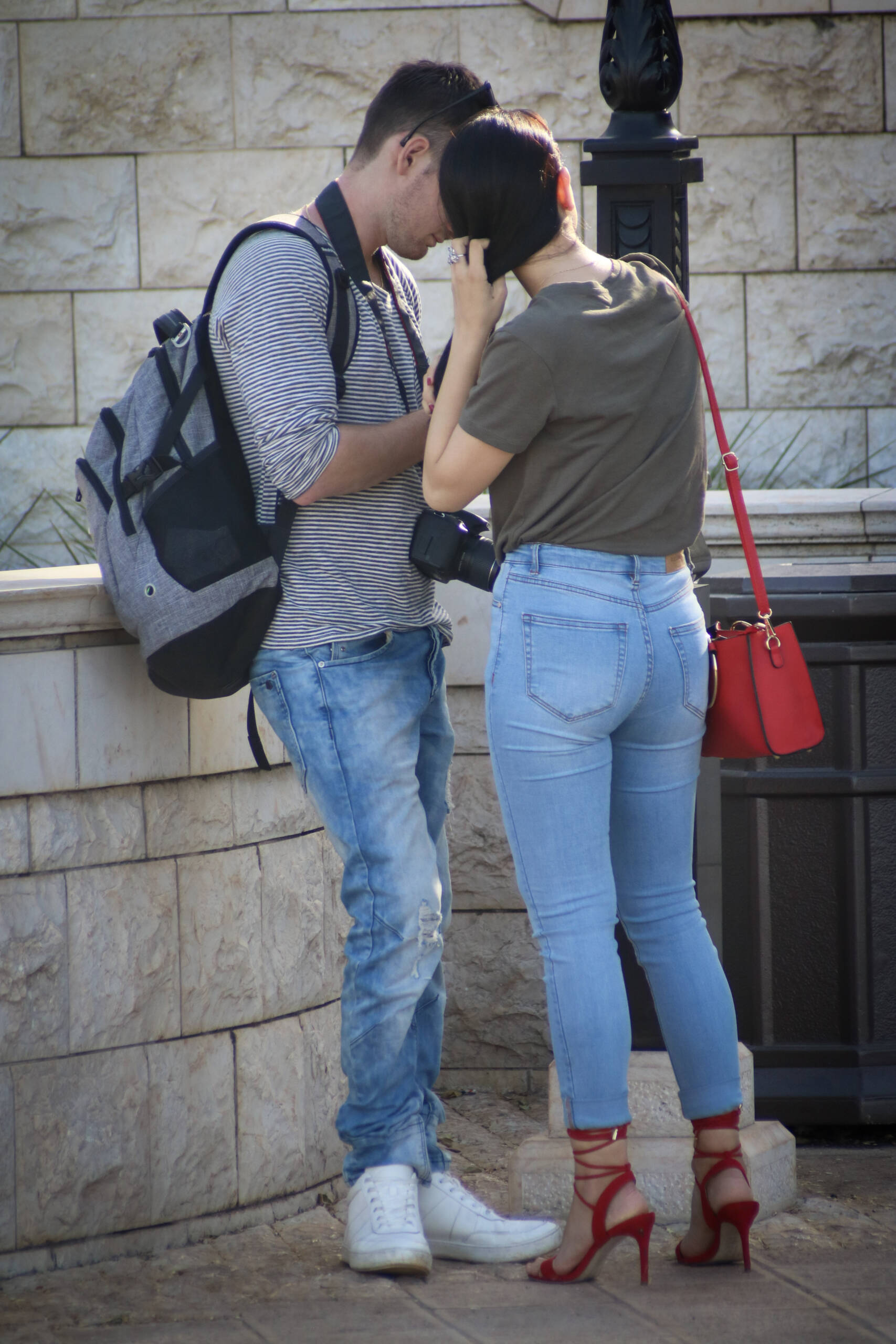
A Couple Exploring the City
A casually dressed couple stands together beside a historic stone building, apparently consulting something on a phone or camera while exploring the city. Their backpacks, camera equipment and informal clothing reinforce the impression of travelers on the move. The image works because it captures an unscripted-looking moment rather than a conventional tourist pose, making it suitable for articles about city breaks, walking tours and independent travel.
For a travel magazine, sourcing images this way creates a much richer visual archive than simply collecting landmark photographs. A strong collection should include recognizable destinations alongside interiors, museums, festivals, beaches, wildlife, food and drink, street scenes and candid human moments. These photographs demonstrate how even a relatively small collection can cover many different editorial subjects and give a travel publication a more authentic sense of place.
- Small Hotels Can Turn Local Partnerships Into Better Direct Bookings
- I Own a Small Pension Hotel. Should I Participate in Travel Trade Shows to Promote It?
- Where to Find the Perfect Burnt Basque Cheesecake in Spain
- One Airline App, Two Carriers: oneworld Tackles the Check-in Gap
- Clear Security in Sonoma, Take a Bus Straight to Your SFO Gate
- Malta’s Trip.com Partnership Turns Tourism Diversification Into a Distribution Strategy
- Royal Caribbean Buys 50% of Sandals Resorts for About $3 Billion, Bringing Cruises and All-Inclusives Together
- TOURISE Summit 2027: March 23-25, Riyadh, Saudi Arabia
- Wrocław’s Market Square in Fisheye: Why I Kept the Distortion
- Salamanca’s Stone Faces: A Photo Essay in Five Frames
- What Museum Rooms Tell Us Before We Look at the Exhibits
- The First Hour After Arriving in an Unfamiliar City
- Bom Jesus do Monte and the Art of the Climb in Braga
- Quimper, Brittany: A Gothic Cathedral, Medieval Walls and Gardens Full of Color
- Largo do Chiado at Night: A Brasileira, the Bronze Poet and a Floor Made of Waves
- Sintra at Noon, Venice at Midnight: Six European Cities and the Hour That Suits Them
- Porto’s Chestnut Season Is the Shoulder Season Worth Booking
- Venice at Night Is the Version No Access Fee Covers
- The 18th-Century Fountain Hidden Inside Bordeaux’s Customs Museum Courtyard
- The Bilbao Effect, 500 Years Early: Jerónimos Monastery And The Guggenheim