Sigma announced the fp2 on October 23, and it ships on November 11 at a suggested $2,199 for the body. It replaces the fp L, which is about five years old, and it keeps the idea that made the fp line odd and interesting: a full-frame L-mount camera small enough to look like an accessory for itself.
The new part is the sensor. The fp2 uses a 24.5 megapixel partially stacked full-frame chip, with stills saved as DNG raw files at 6,016 by 4,012 pixels. On the video side it records 6K open gate and ProRes RAW HQ, with 32-bit float audio. Sigma also says autofocus is much faster than before, and battery life is up about 30 percent, to 370 shots by the CIPA standard or roughly two hours of video.
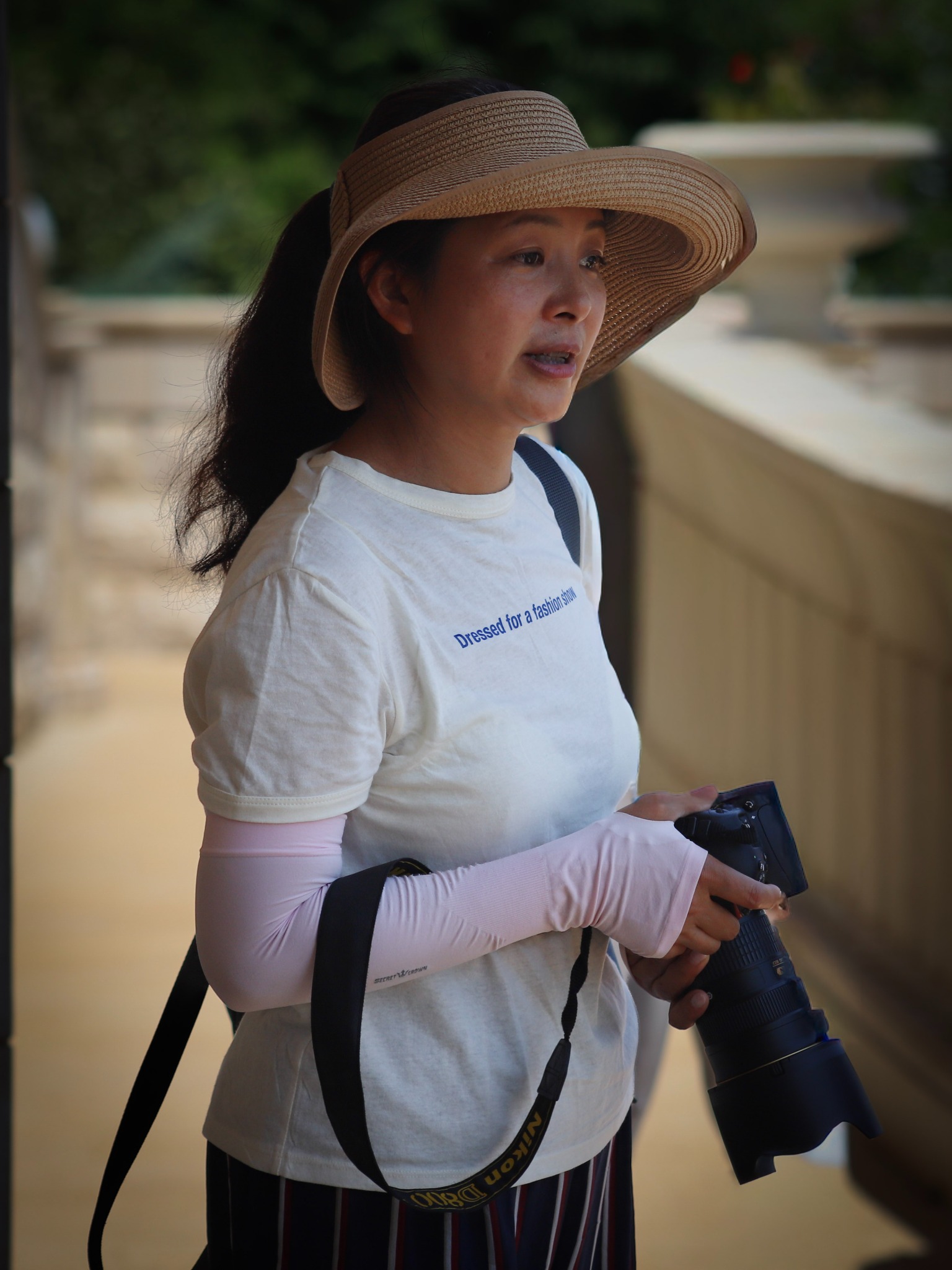
That photograph is the kit most travel photographers actually carry: a mid-size body and a long hooded zoom, held with two hands. The fp2 asks a different question. What if the body almost disappears, and the lens is the only thing you notice? At 460 grams with battery and card, it’s lighter than plenty of zooms.
What the small body costs you
Small comes with real trade-offs, and Sigma doesn’t hide them. There’s no built-in viewfinder. The flip-out touchscreen has 2.1 million dots, and an eye-level view means buying the separate EVF-21, an OLED finder with 5.76 million dots that clips on. There’s no hot shoe either, and because the camera uses an electronic shutter only, flash is out entirely.
The electronic-only shutter is where the partially stacked sensor matters. A faster readout cuts the skew you get when a fast subject or a quick pan crosses the frame during exposure. It won’t match a fully stacked sensor, but it makes a no-mechanical-shutter camera far more usable for moving subjects than the original fp was.
Who it suits
The fp2 makes the most sense for photographers who also shoot video, or video shooters who want stills that hold up. Recording goes to 70 GB of internal storage or an SD card, and a 10 Gbit/s USB-C port handles fast offloading and external drives. A street photographer with a small L-mount prime gets a full-frame camera that fits a jacket pocket. A wedding or event photographer who depends on flash should look elsewhere.
Pair it with a compact prime and walk around for a day. That’s the test this camera was built for.