
Twelve frames made the cut this week, which is fewer than I shot and more than I expected. The camera came out on days I had not planned to bring it, which is usually the sign of a decent week rather than a busy one.
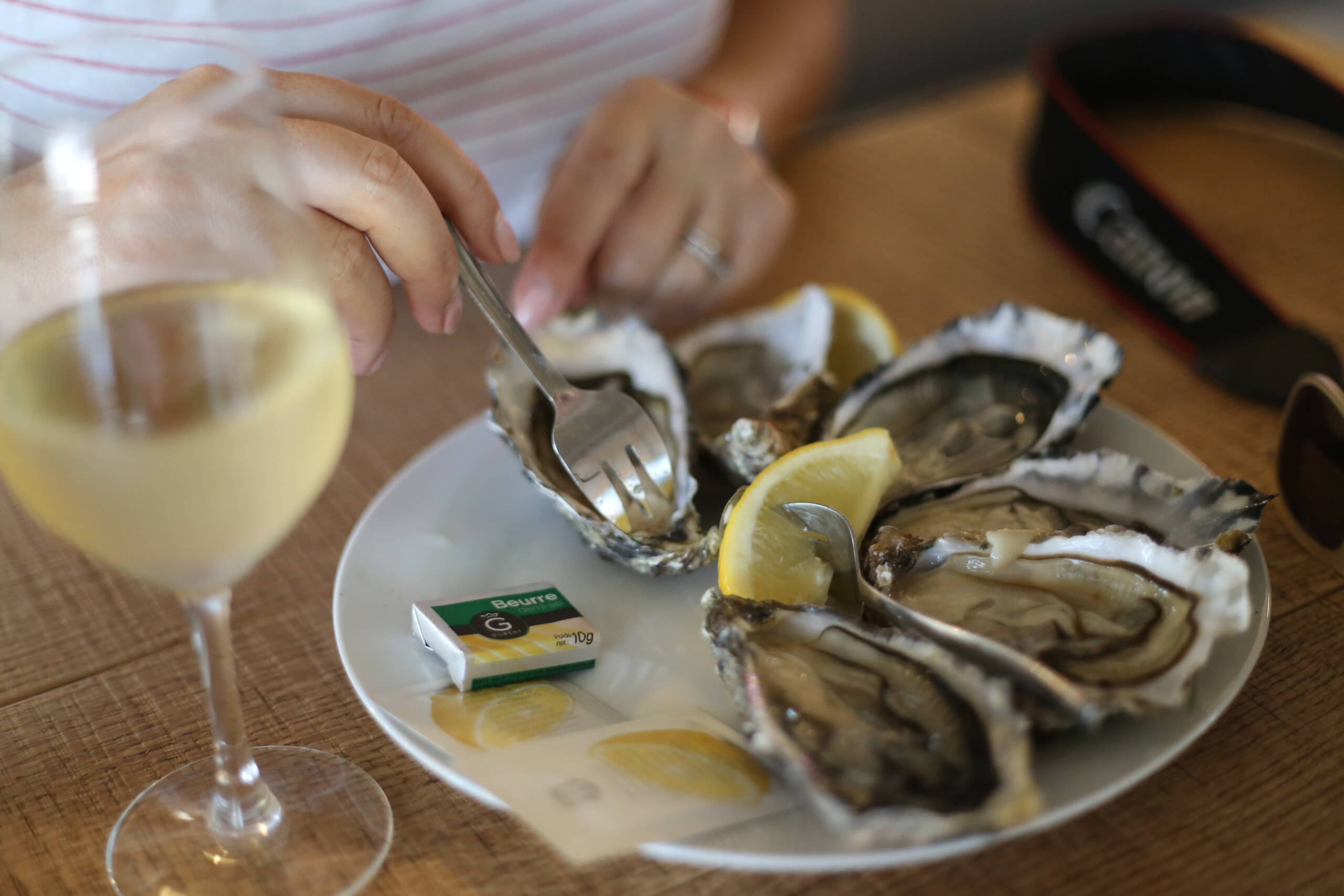
It started with oysters. Somebody’s hand, a squeeze of lemon, a small glass of something cold and pale, and the little card of sauce packets sitting there looking cheap next to the shells. That contrast is why I took the picture. Oysters photograph as luxury by default and the actual experience is nearly always more casual than that — a plate, a wobbly table, someone talking over you. I like the frames where the cheap detail survives.
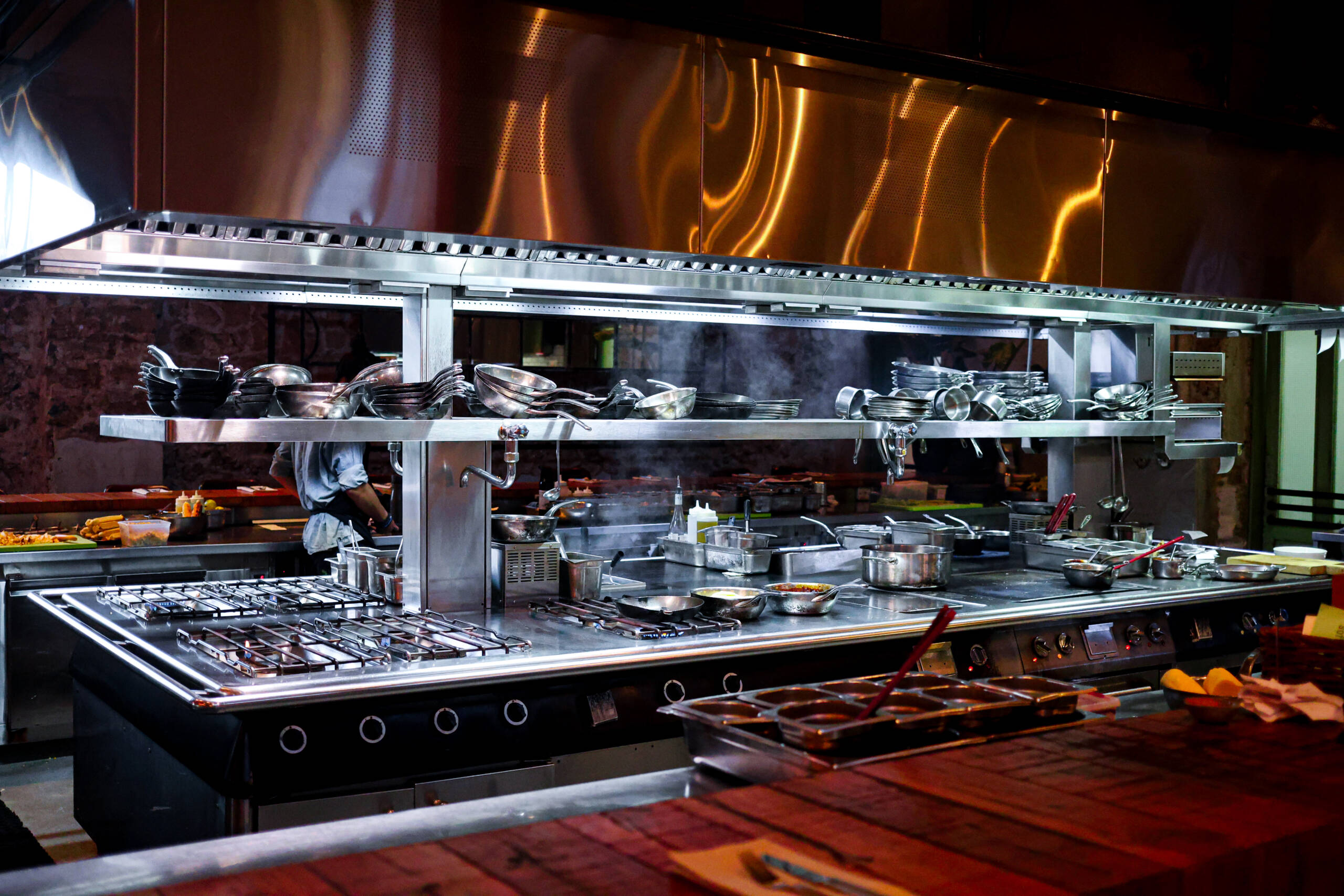
The kitchen pass came later the same day. I have been trying to get into more working kitchens with a camera and mostly failing, because chefs are polite about it and then you realize you have twenty seconds before you become furniture. This one gave me maybe four frames. The heat lamps do all the work — that strip of orange along the top of the frame is the whole picture, and the stacked ceramic and the hanging spoons underneath are just texture. Steam moved through the shot and I decided to keep it rather than wait it out.
The Trade Show Days
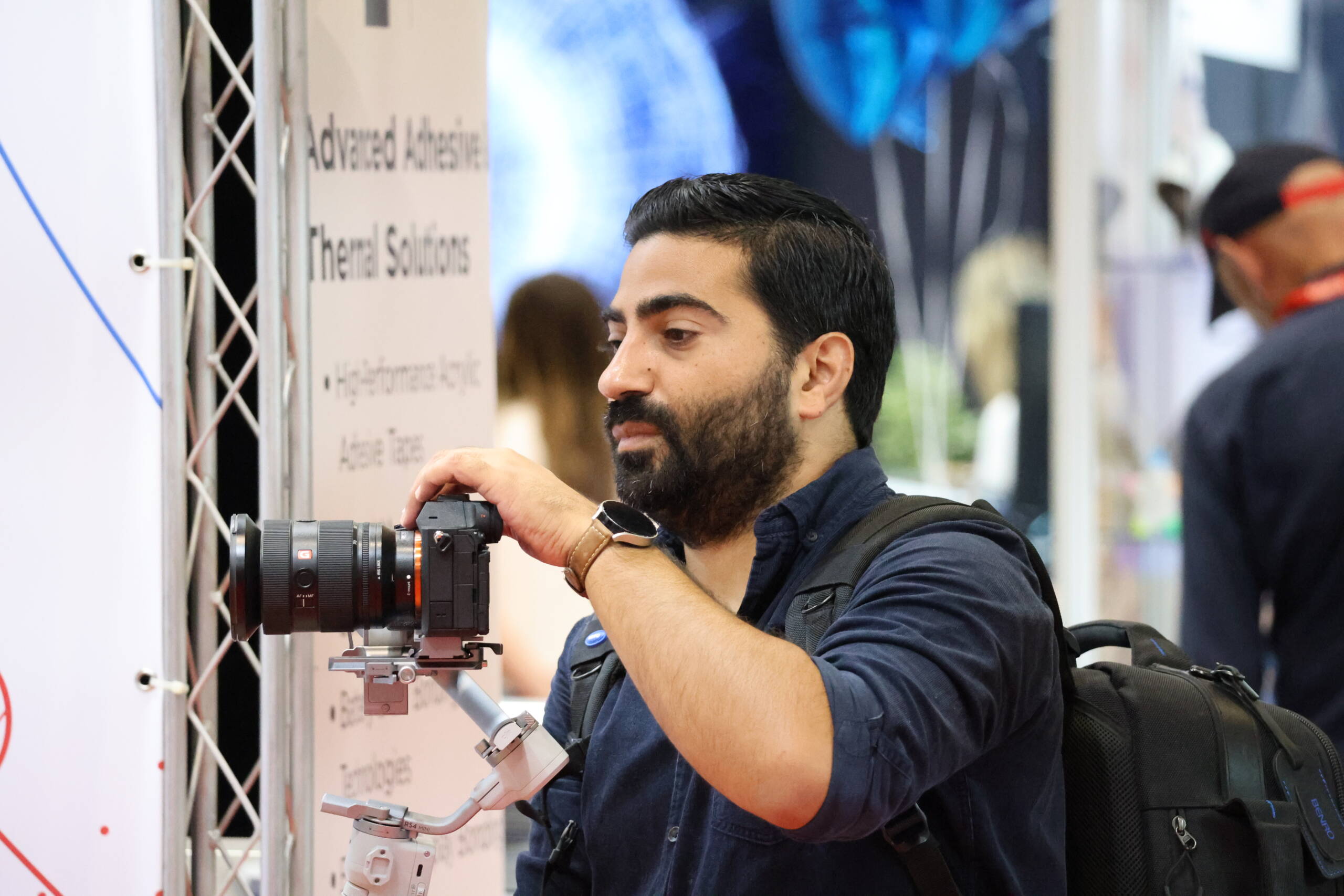
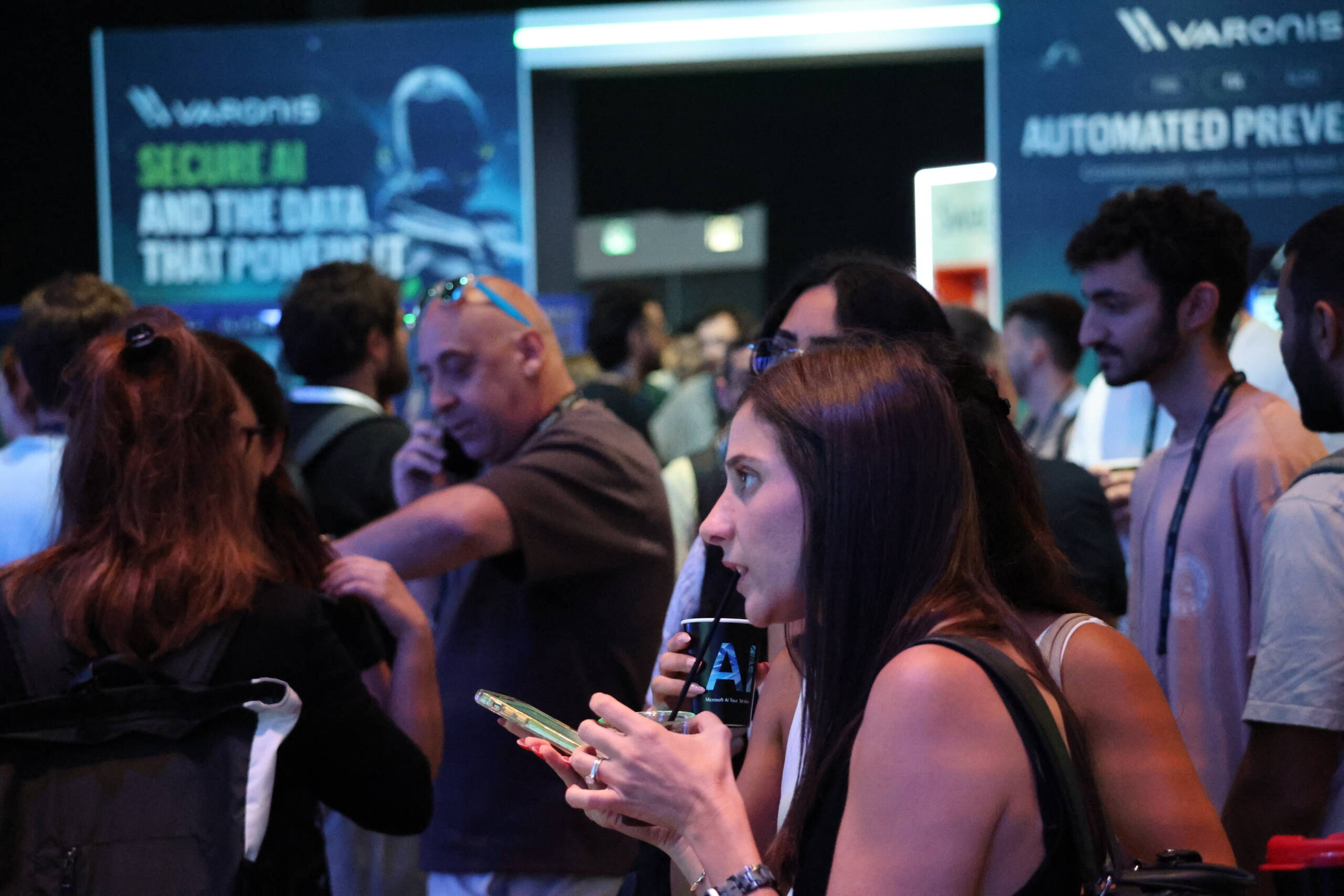
Two days on an exhibition floor, and the honest summary is that I spent more of it watching other photographers than shooting. There is a particular posture people get at these things — arms out, camera pressed against a booth display, checking the back of the screen, backpack still on. I photographed one of them doing it and then caught myself standing exactly the same way ten minutes later.
The halls were the usual nightmare of light. Blue LED walls, tungsten spots, and a ceiling grid pulsing at a frequency that puts bands across anything shot above 1/125. I wrote up the technical side of that separately because it turned into more of a lecture than a diary entry deserves. Short version: anti-flicker on before you walk in, and stop trusting auto white balance in any room with more than one kind of bulb.
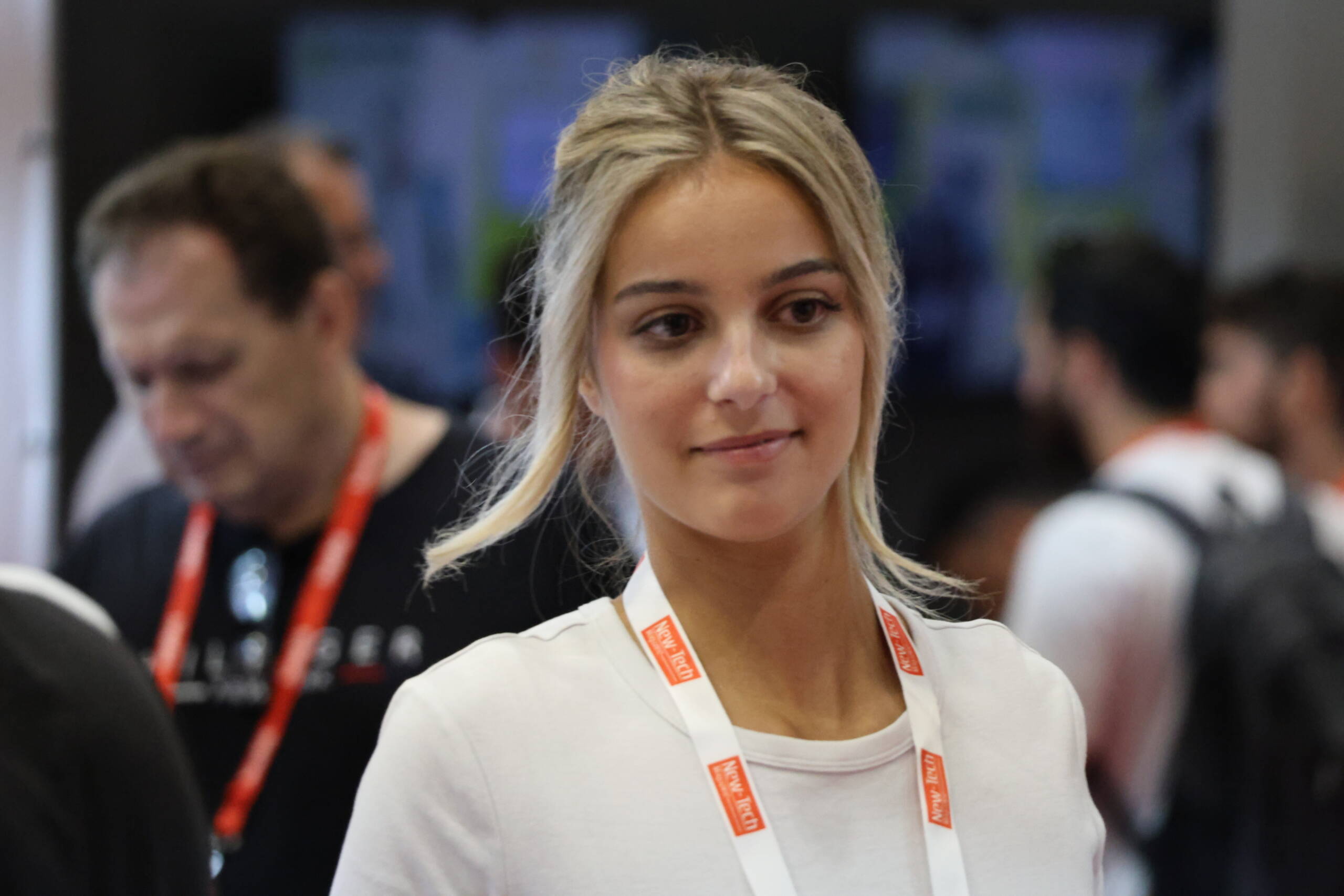
What I actually enjoyed was the audience. Rows of people in the dark, faces lit by a screen, half of them listening and half of them on their phones — that reads better as a photograph than any product on the floor did. Nobody notices you shooting an audience. Everybody notices you shooting a booth.
Whisky, and a Wall of It
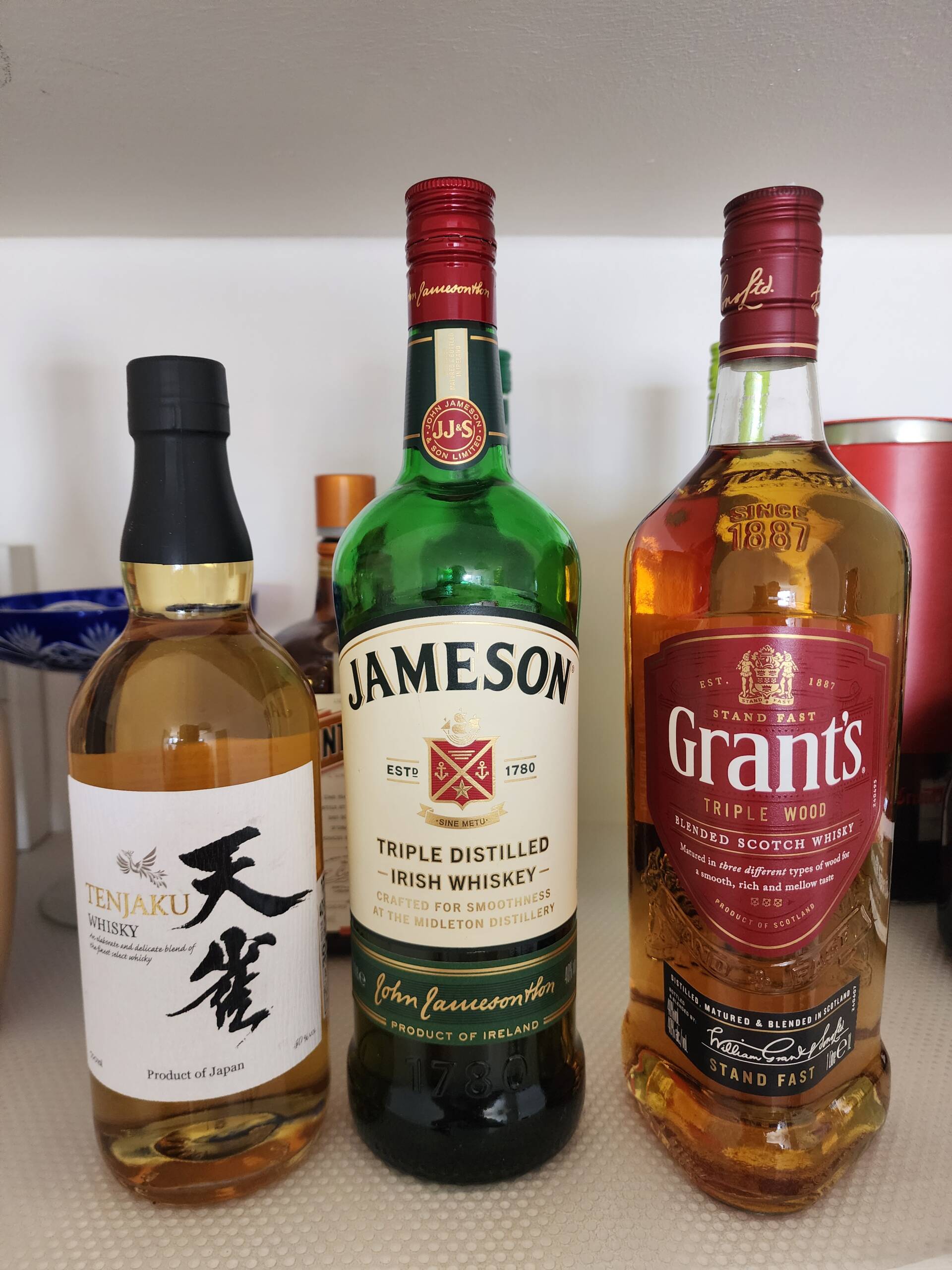
Three bottles on a countertop: a Japanese blend, an Irish, and a Scotch. Not a considered selection, just what happened to be standing there together, which is exactly why I photographed them. The label design across those three is a small lesson in national branding on its own — the restraint of the Japanese bottle, the crowded heraldry of the Irish one, the shouted date on the Scotch.
I shot it in window light with a piece of white paper propped up on the left. No flash. Flash on glass is a trap; you get a little mirrored circle of the tube in the shoulder of the bottle and it never looks like anything but a mistake.
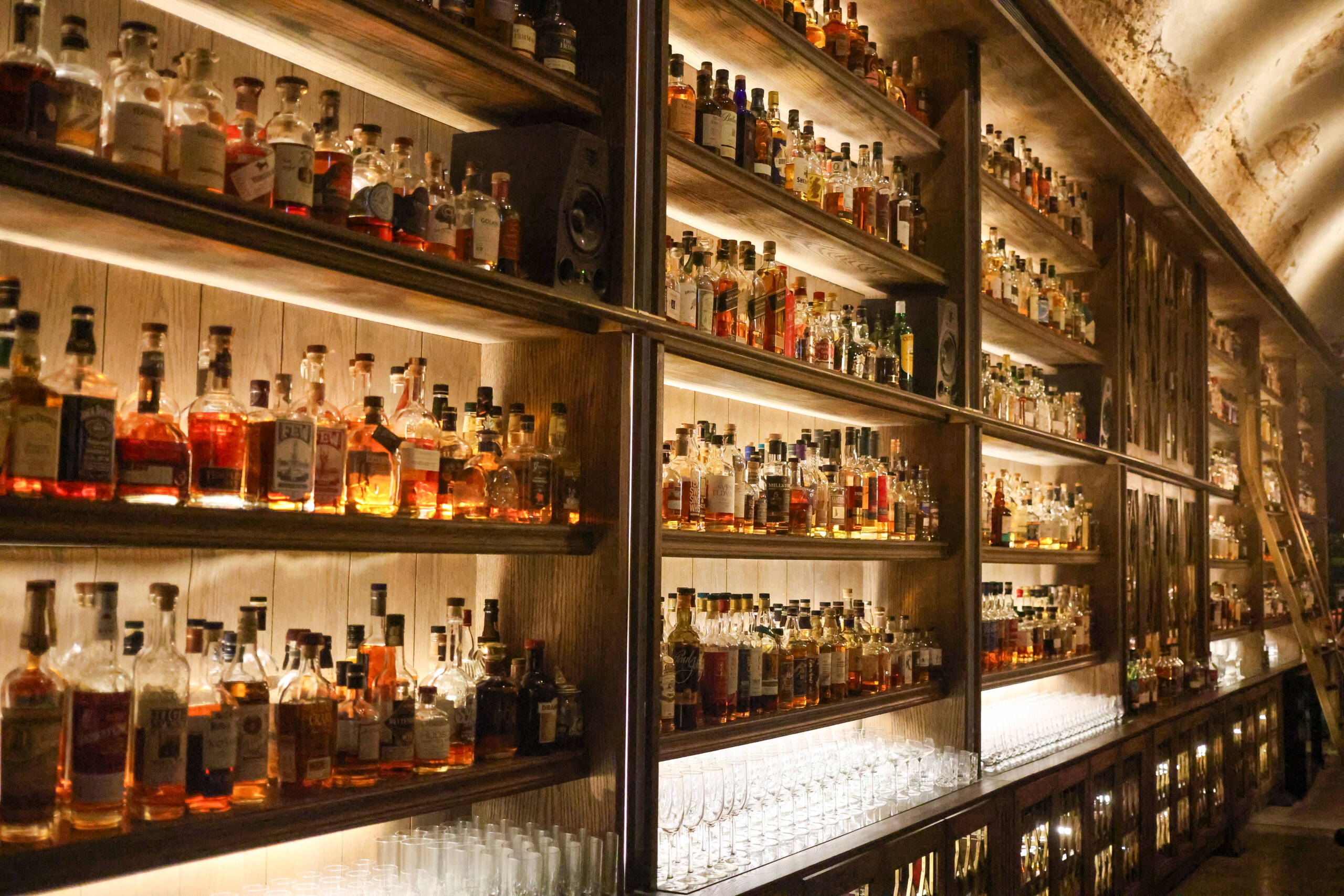
Then, separately, a bar with what must be three hundred bottles on backlit shelves. That one is the opposite discipline entirely. The shelves are the light source, so you expose for the glow and let everything else fall into the dark, and the result looks like the room actually felt rather than like a room with the lights on. I sat there long enough that the bartender stopped noticing me, which is the only real technique that matters.
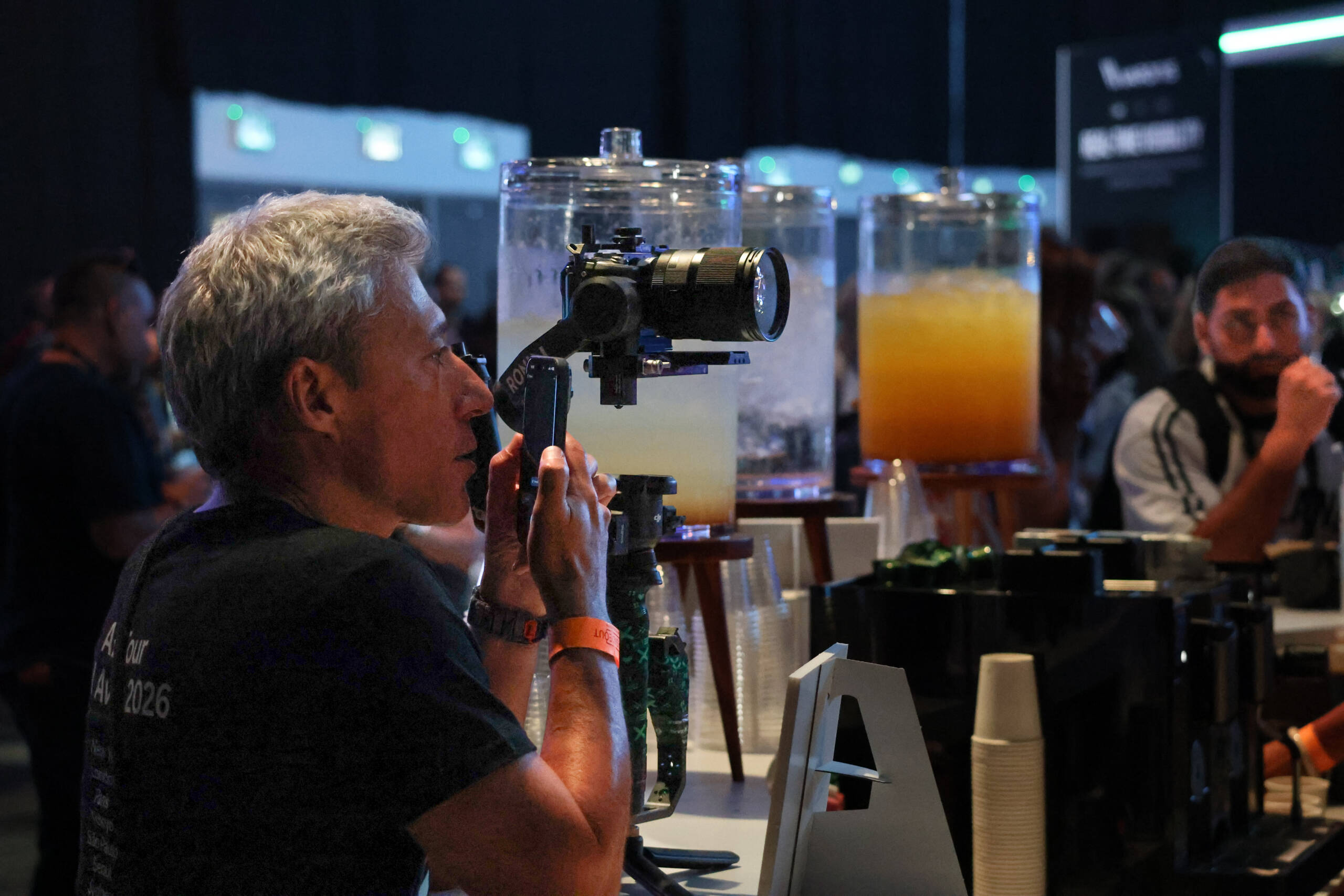
There is also a frame of someone filming cocktails on a tripod, three tall glasses in a row going orange to yellow. I do not know what it was for. I liked that the setup was so much more elaborate than the drinks.
The Frames That Don’t Belong
Two images in the grid are from outside this week and I left them in anyway.
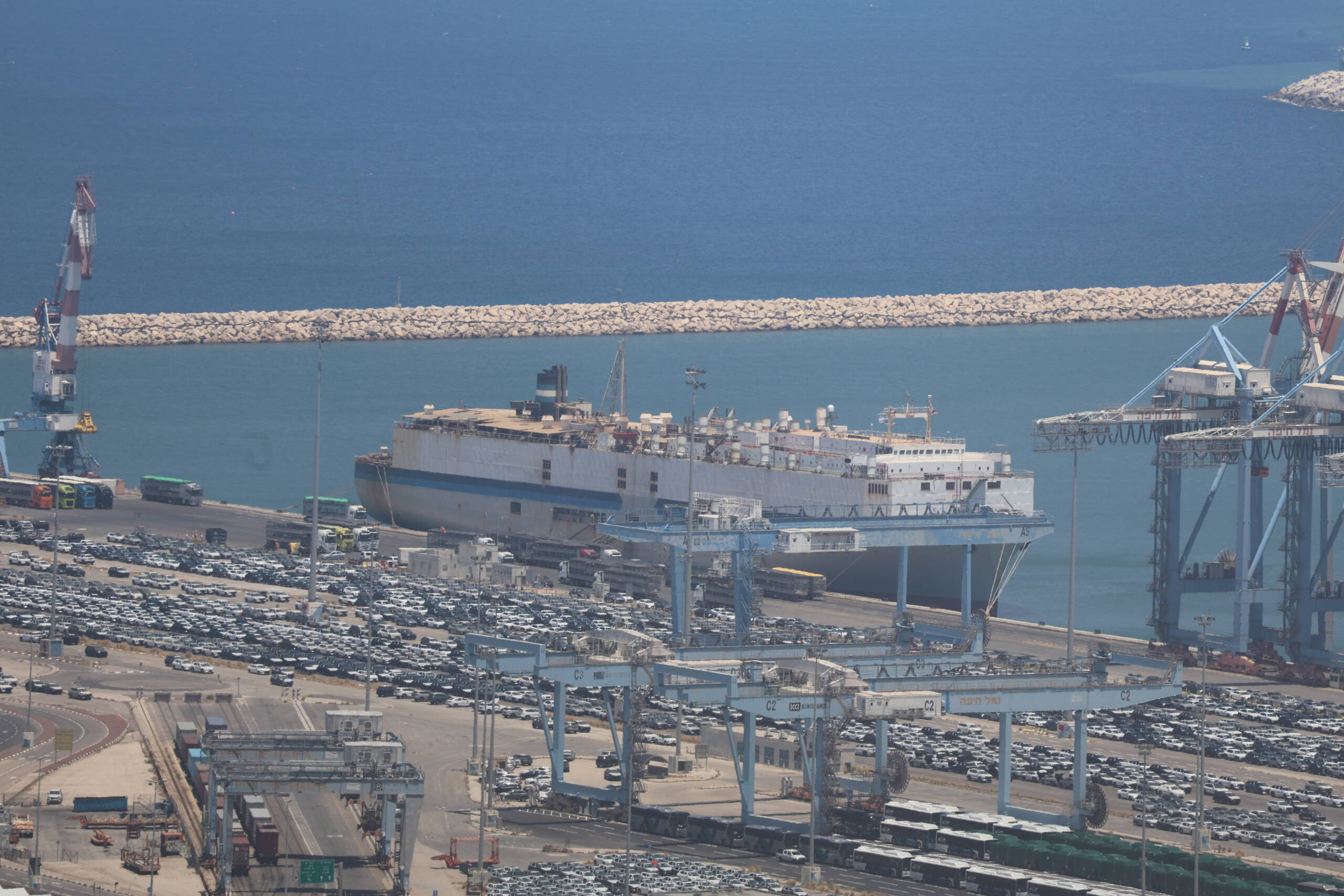
One is a port from a hillside — a car carrier alongside, cranes behind it, rows of new vehicles that look like grains of rice from that distance. It was hazy, and the polarizer only got me halfway. I keep going back to that vantage point and I keep not quite getting the shot I want.
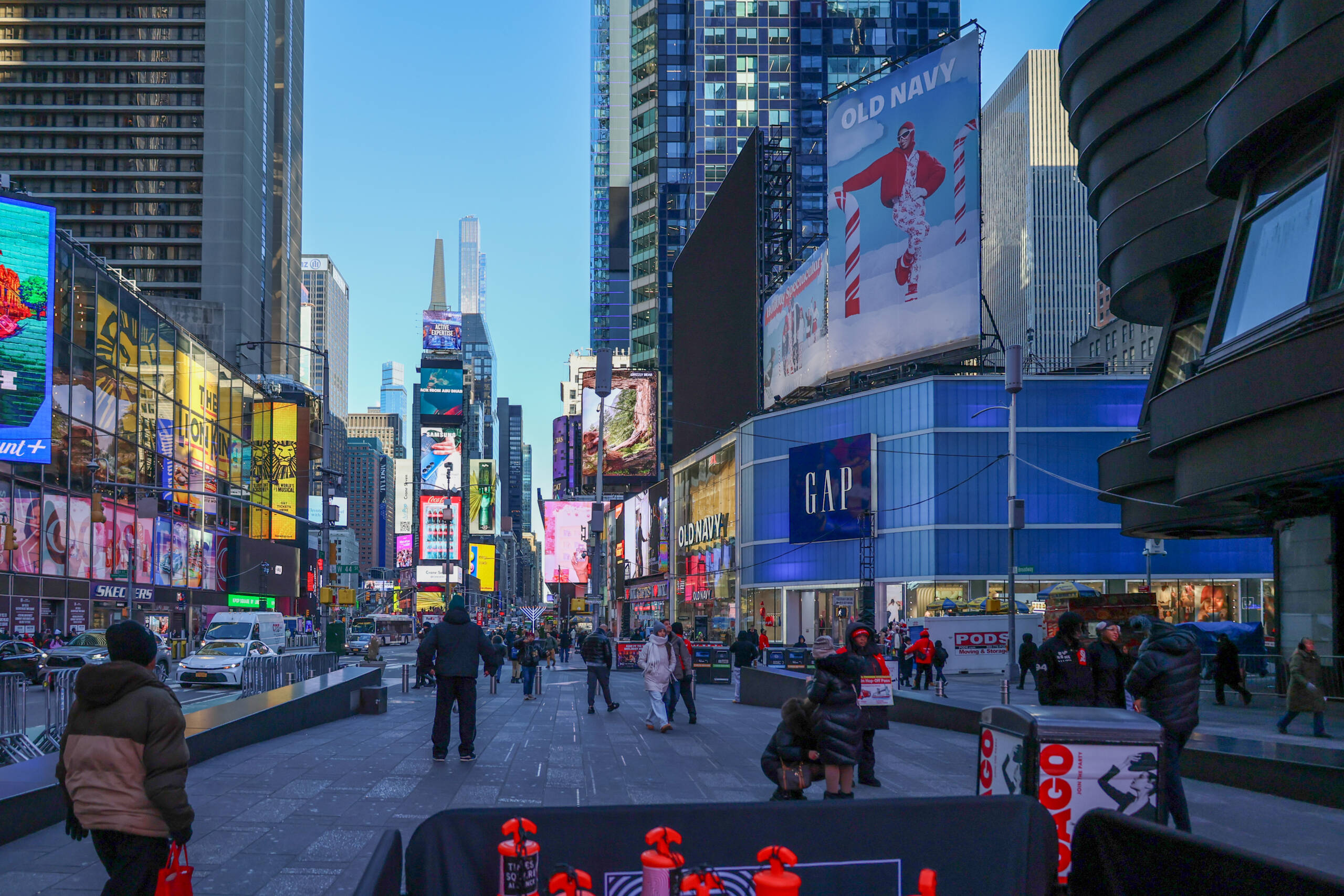
The other is Times Square, which is from an entirely different year and slipped into the folder because of how I file things. It does not belong in a week that otherwise happened within about forty kilometers of home. I kept it because a grid of twelve wants one image that breaks the mood, and because it reminds me that my archive organization is a slow-moving disaster I will deal with eventually.
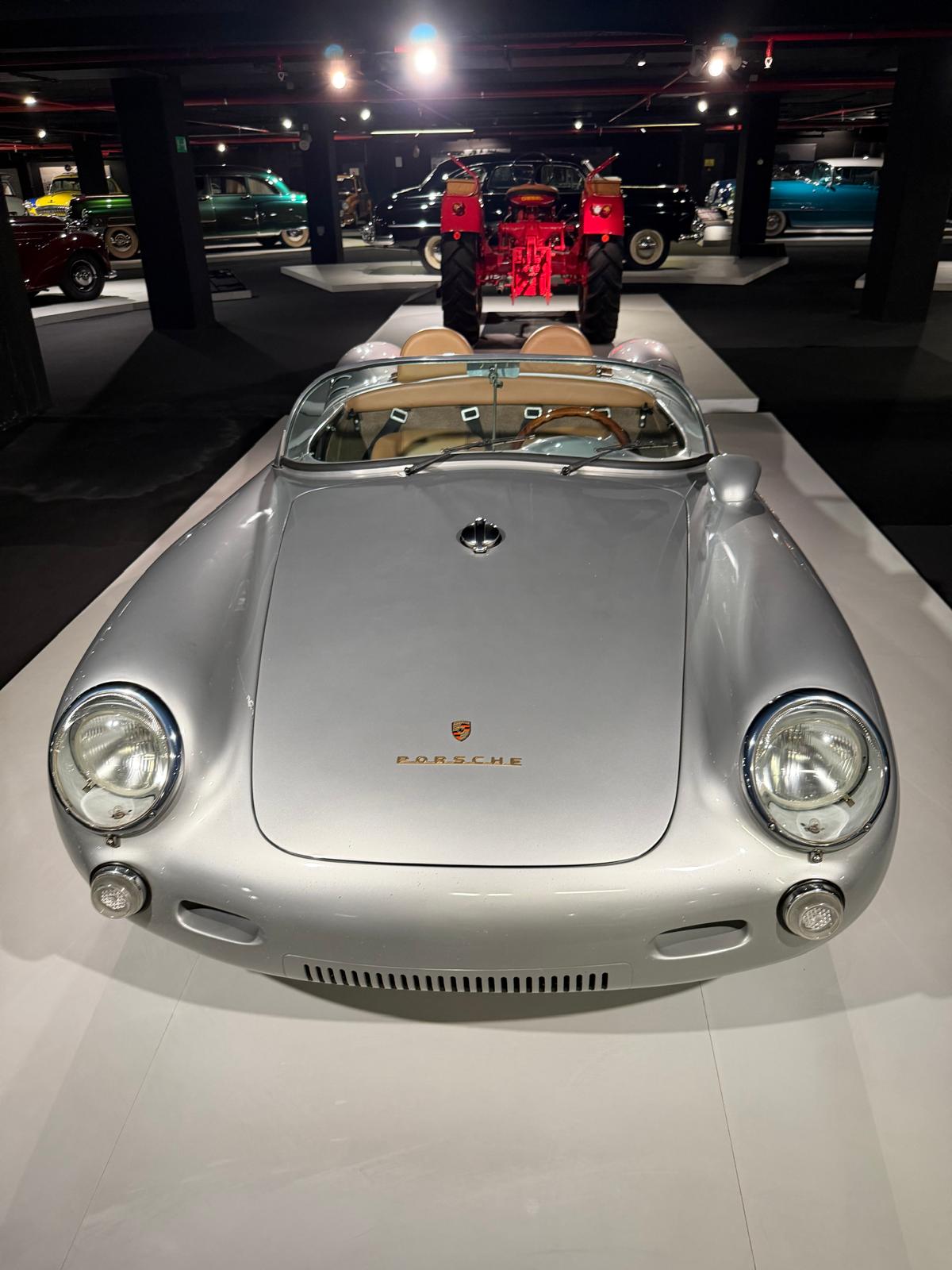
And then the last frame, which is the one I would keep if I had to throw out the other eleven: a silver Porsche 550 Spyder under a single hard light in a dark room, shot straight down the nose. Nothing else in focus, nothing else lit. Cars in museums are usually impossible because of the reflections and the crowding, and this one was set up as if somebody had already solved the problem for me. I took four frames and left.
An Air Tractor also went over while I was standing outside somewhere mid-week, low and yellow against a completely empty sky, and I got the camera up in time. Prop blurred, which means the shutter speed was right. Small victories.
Next week: fewer indoor rooms, hopefully.
Week Digest- A Schema Diff That Warns Which Migration Will Lock a 40-Million-Row Table or Lose Data
- A Single-File Log Database: Pipe Logs In, Query Them With SQL, Hand the File to Anyone
- A Database Where Every Value Remembers Its Source, Confidence and Extraction Time
- An AI Agent Flight Recorder Belongs in One Portable File, the Way HAR Did It for HTTP
- An Evidence Graph Built From Extracted Claims Keeps Contradictions Attached to Their Sources
- A Background Job Queue in One SQLite File Covers What Most Apps Deploy Redis For
- Infer Your API's Real Contract From Traffic, Then Diff It Against the Docs
- An Embedded Sketch Database: Billions of Events, Megabytes of Storage, Error Bars on Every Answer
- Fuzzing MCP Servers: Generate Bad Arguments From the Tool Schema and Watch What Breaks
- Give Any API a History: Poll It, Hash It and Query Old Versions With SQL