
• Skip to main content
  • Skip to secondary menu
  • Skip to footer

Pixel Effects

Pixel effects. Media gallery. Visual storytelling.

  • Sponsored Post
  • About
    • GDPR
  • Calendar
  • Domain Aftermarket
  • Contact

Manufactured for the Lens: Staged Media Events, Tourist Crowds and the Access Problem in Photography

August 21, 2026 By admin Leave a Comment

Photographers working an organised media event

Access · Staging · Provenance

Most of what a camera is pointed at was arranged by someone who wanted it photographed.

A snowmobile parked on trucked-in snow in the middle of an Austrian shopping street is not a snowmobile. It is a photograph waiting to happen, and the rope line, the rider, the twenty-minute window and the dozen photographers working the same three angles are all part of the manufacturing process. The mechanics are laid out plainly in this account of how product stunts buy earned media cheaper than advertising, and once you have read it you cannot un-see the setup at every launch, every ribbon cutting, every carefully lit factory tour.

This is not a complaint. Staged events are a legitimate and often generous source of pictures. But they define the working conditions: fixed position, fixed duration, shared angle, and a subject built to look identical in everyone’s frame. Understanding who arranged the scene and what they need out of it is the difference between coming home with the picture the organiser commissioned and coming home with one that is yours.
Wide frame of an organised event with press positions and a public rope line
The wide frame is the one nobody is being handed. Step back far enough and the staging becomes the subject.

01 — The image outlived the text

The press release died. The press photograph didn’t.

Wire volume is up, the format is profitable, and nobody involved is writing for a journalist any more — the argument that the press release survives as a document type long after its mechanism died applies twice over to the image pack that ships alongside it.

The difference is that the photograph still works. A handout picture gets used because an editor needs something at 1600 pixels wide in the next four minutes, and the file that is already sitting in the folder wins. Which is exactly why the frame that was not in the pack has value.

Press photographers shooting a subject from a shared fixed position

Every photographic problem worth solving in 2026 is an access problem wearing a technical costume.

Lens choice, ISO, shutter angle — all of it is downstream of whether you are inside the building, on the right side of the rope, or holding a permit. Three examples follow, none of which are about cameras.
Industrial subject photographed from a permitted vantage point

02 — The closed factory floor

Industrial photography is booming and unphotographable

The most consequential building programme of the decade is happening behind fences. Read the case that the binding constraint on Western military power is physical production capacity and you are reading a description of hundreds of new motor lines, casting shops and assembly halls that will be documented almost entirely by staged handout imagery.

The same closure applies to compute. A company like Agon, which raised $30 million to build sovereign AI training infrastructure for European defence customers, will produce exactly one approved exterior shot and a rendering. Everything else is classified, and the visual record of the period will have a hole in it shaped like the thing that mattered most.
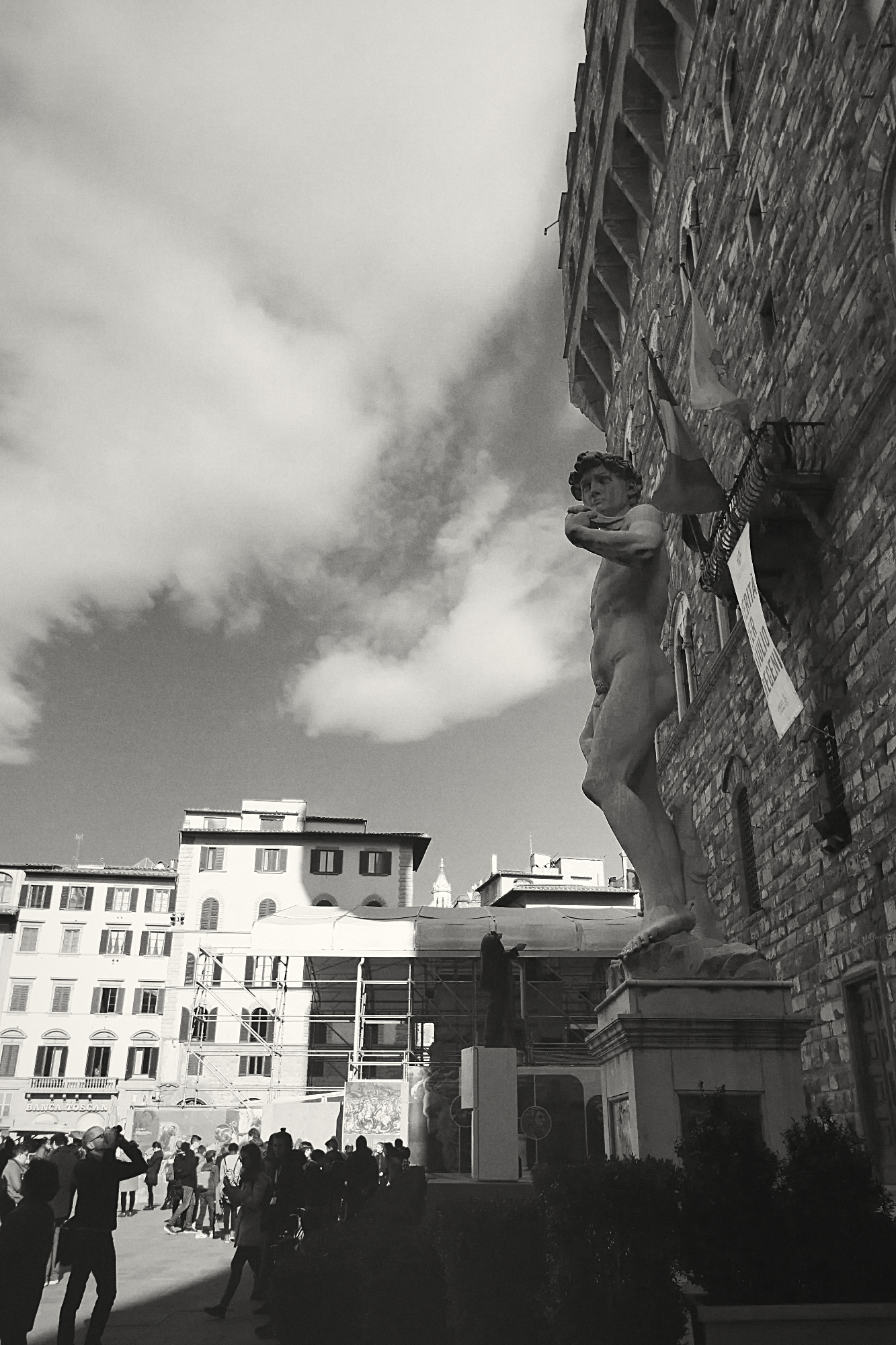
Vertical black and white street frame in a heavily visited district
Monochrome, vertical. The crowd reads as texture rather than as individual faces.
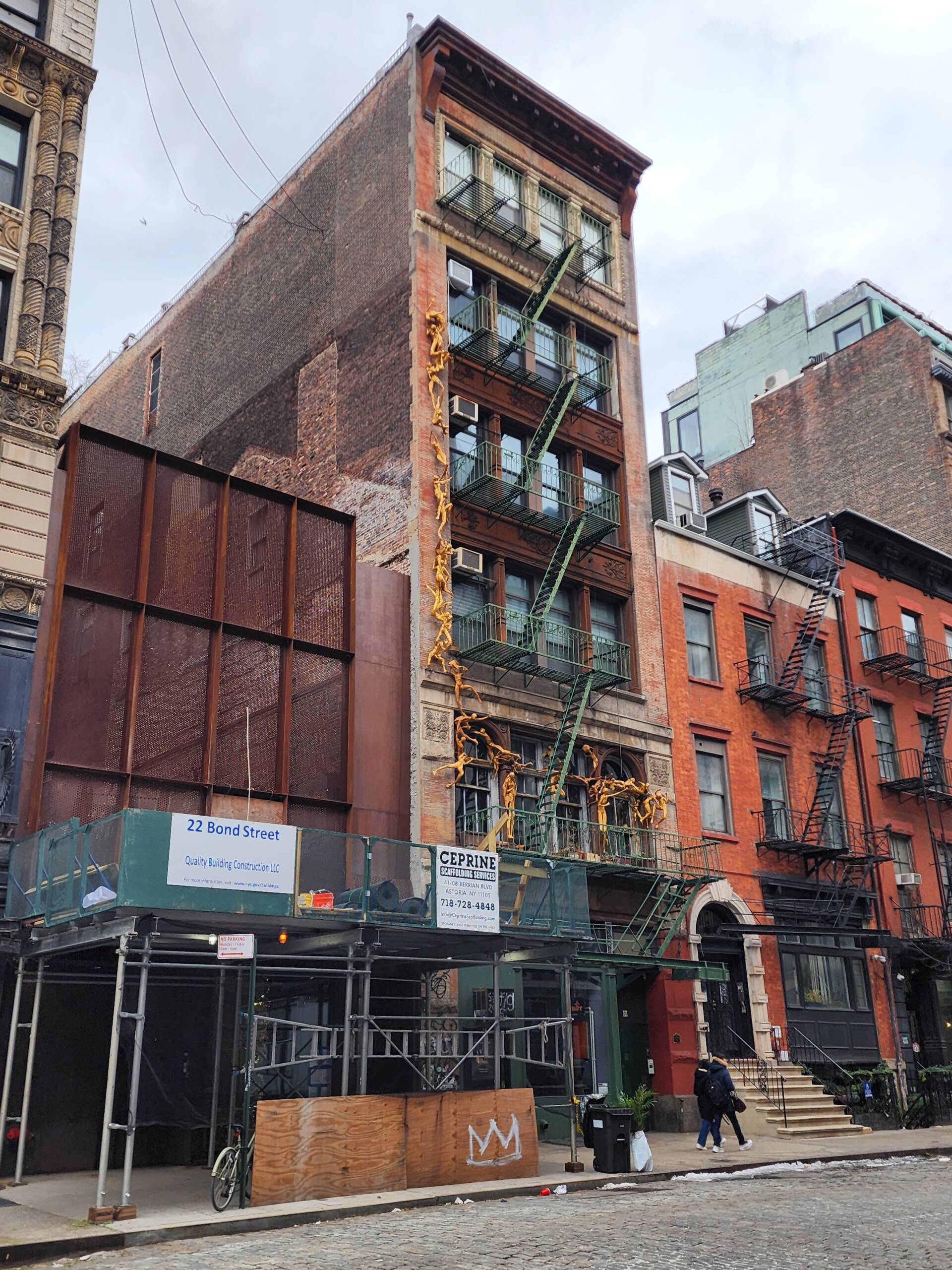
Tall vertical frame of a historic urban street
Taller aspect, same problem: the buildings outlast everyone standing in front of them.

03 — The priced landmark

When the location starts charging admission

The second access regime is the one that sends you an invoice. Venice is the working example: the historic centre has lost more than seventy per cent of its residents since the early 1950s while absorbing some of the highest visitor volumes per head in Europe, and the policy response has been aimed at flow rather than at housing.

For a photographer the consequence is concrete. Day-fee schemes, timed entry and tripod permits all reshape what a frame can contain and when it can be taken, and they push the honest picture toward the shoulder hours — before the gates open, after the last group leaves, or in the residential lanes where nobody has thought to install a turnstile yet.

The third regime is export control, and it lands directly on kit. When drone exports and their key components move to case-by-case licensing for US destinations, the practical effect on aerial work is availability, spares and price — not policy in the abstract but a gimbal you cannot replace.
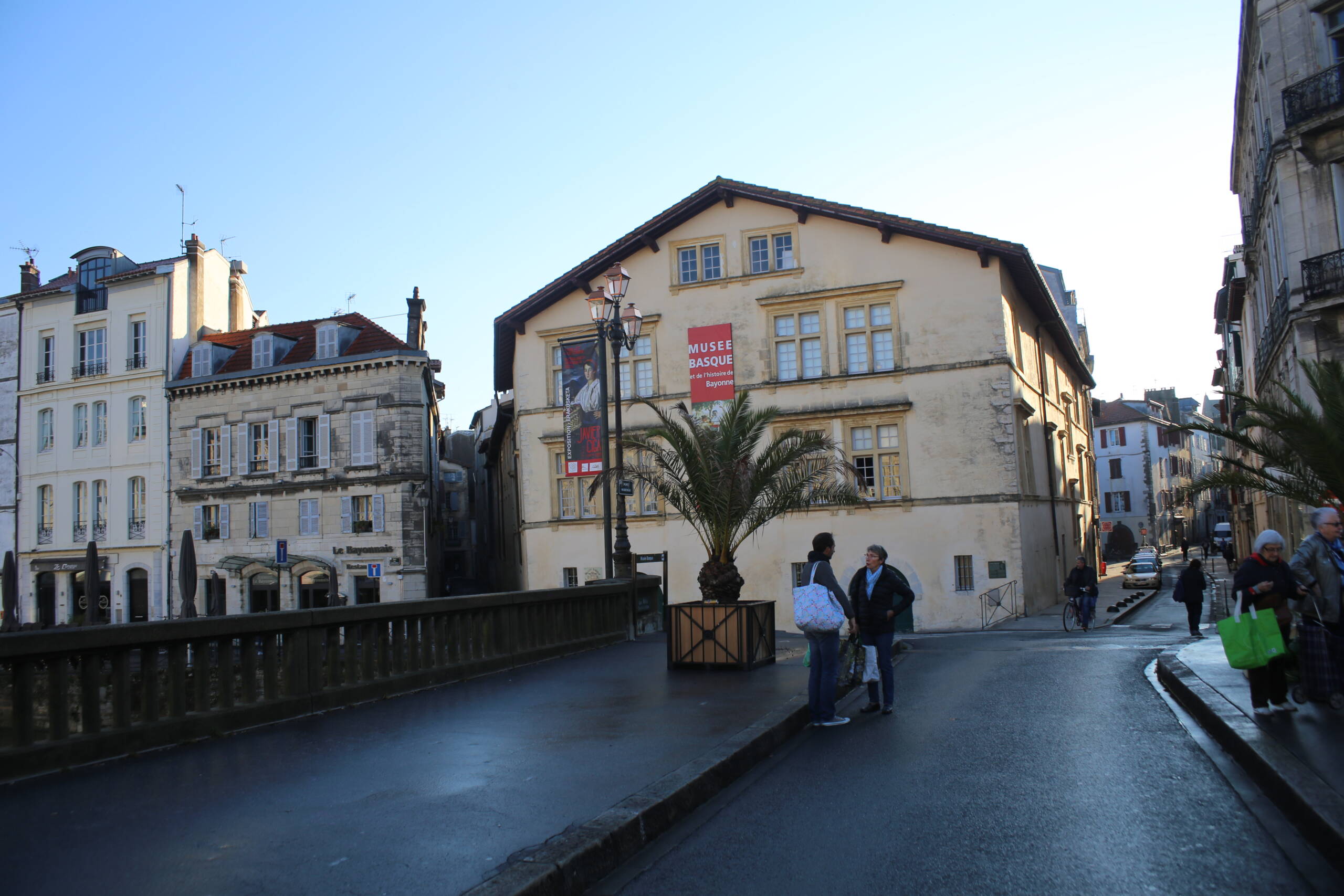
Frame taken outside the organised press window

Arrive an hour early or stay an hour late. That hour is the only thing you own.

The other kind of picture: when a chart is the image

Half the images that move through a news cycle were never photographed. They were plotted, and they obey the same rules: framing decides the argument, the axis is a crop, and the caption does most of the work.

Chart plate showing a long-run yield series

A nineteen-year high reads as catastrophe on a two-year axis and as an ordinary level on a forty-year one — which is the argument in the 30-year Treasury at 5.31% while mortgage rates fall.

Chart plate showing a steep single-name price move

A vertical line is not a story on its own. Sandisk’s cost of revenue falling while revenue rose 372% is the part a price chart cannot show you.

Square chart plate showing a commodity price decline

Same trap in softs, where cocoa down 34% into a confirmed El Niño only makes sense once you know the market is pricing inventory rather than weather.

The clearest version of the framing problem is an income statement rather than a chart: Tempus AI’s first profitable quarter was a $97 million mark-to-market gain sitting on top of a wider operating loss. Crop tightly enough and anything looks like a turnaround.

04 — Who is holding the camera

The phone is the default camera, except where it isn’t

The assumption that every scene is being recorded by everyone in it is holding, but not universally. Support for classroom phone bans has moved fast — from 68% in 2024 to 77% of US adults now — and a policy trend that removes cameras from an entire category of space is a photographic story before it is an education one.

Wherever the phones go, the question of what a file can be trusted to prove follows. Detection tooling remains largely unreliable, and the argument that the detector was right in one clean case while remaining junk in general is the right posture for image provenance too: embedded capture data is evidence, a confidence score is not.
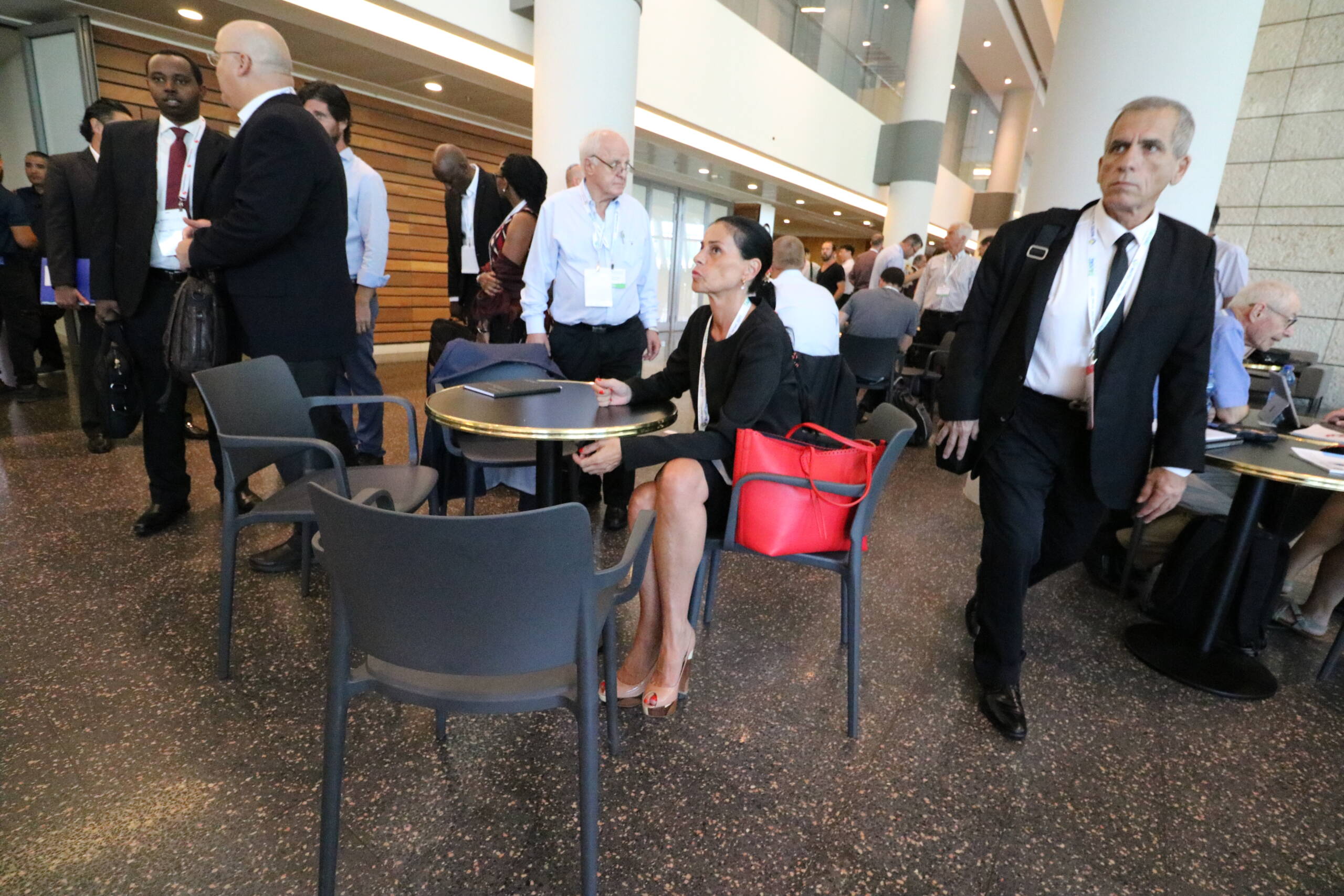
Candid frame of a person photographing with a phone in a public space

Keep the originals. The archive is the only part of this that appreciates.


Shoot the thing that gets cancelled

Prototypes, demo units and stands for products that never ship end up being the only record that they existed. The list of consoles announced, demonstrated and quietly killed is largely a list of things somebody photographed once at a trade show.

Log what you did, not just what you got

The case for tracing an automated action chain rather than only its output is the same case for keeping raws, capture times and location data intact through the edit. Provenance is a habit, not a plugin.

The scene was arranged for someone. The only question is whether it was arranged for you.

Filed Under: Blog

Reader Interactions

Leave a Reply Cancel reply

Your email address will not be published. Required fields are marked *

Footer

Recent Posts

  • What a Lanyard Reveals: Credential Badges as an Open Source Collection Surface
  • Manufactured for the Lens: Staged Media Events, Tourist Crowds and the Access Problem in Photography
  • Go Black and White When Color Adds Nothing: A Before and After on One Street Frame
  • Freight in 2026: Record Rates, Zero Free Cash Flow, and the Costs That Never Move With the Market
  • Chip Supply Chain Terms in the News: DUV, HBM, Entity List and What They Actually Mean
  • Shooting People Small: Scale and Negative Space on the Saone Quays in Lyon
  • Weekly Network Analytics: 65 Sites, 15.63k Visits, and a 431% LCP Regression
  • Weekly Diary: A Trade Show Floor, Three Whisky Bottles, and a Porsche 550 Spyder
  • Lyon Part-Dieu Is a Permanent Construction Site, and That’s the Most Honest Thing About Lyon
  • Fifteen: What the Tabs Left Behind

Media Partners

  • Referently.com
  • Briefly.net
  • ESN.net
Agentic Manufacturing Networks: How CAD MCP Servers and Instant Quoting Engines Are Closing the Design-to-Part Loop
Export Control Terms Every Chip Investor Confuses: EAR, Entity List, FDPR
Wall Street Trading Slang: The Language Traders Actually Use
Notre-Dame de Fourvière's West Front: The Basilica Lyon Built Because the Prussians Stopped Short
AI Sovereignty: Definition, the Four Layers, and Why Compute Is the Hard One
Cadence Q2: A $6.3 Billion Guide Raise on the Day Lithography Broke
China's Domestic DUV Line Cut ASML 7% — But DUV Was Never the Chokepoint
HBM Cannibalization Reaches the Laptop Shelf: What Framework's RAM Pricing Says About DRAM Contracts
Nvidia's $5 Billion SSI Stake and the GPU-for-Equity Loop Funding the AI Buildout
Apple's Chinese Memory Pitch Undermines the Supply Chain Nvidia Just Paid $500 Billion to Secure
Ninth Pass, No Particular Order
Balerion AI Raises $6 Million to Bring Agentic AI to Mortgage Origination
Live Nation and Ticketmaster Lose the Core Antitrust Fight
Why Prestige Drama Keeps Collapsing in Season Three
The Newsletter Bubble and Who Survives It
Peak TV Is Over — What Comes Next
Why Startup Valuations Haven’t Fully Reset
What the Fed’s Patience Is Actually Signaling
Dollar Dominance: Slow Erosion or Cliff Edge?
The Cloudflare CMS Bet and What It Signals
SanDisk (SNDK) Buyback: The $4.5 Billion Already Spent Sits Above Today’s Share Price
IonQ’s $58M DARPA Clock Opportunity Is Bigger Than It Looks
Strategic Analysis: Why Munition Constraints Alter the Bargaining Table—Not the Outcome—in the Strait of Hormuz Crisis
BitMart Shuts Down as X Money Offers 6% and Kalshi Wins in Minnesota
NBCU Puts All Peacock Content Into YouTube Premium Starting Early 2027
Alphabet Q2 2026: The $85bn Bet Wall Street Hasn’t Priced
Eleven, and the Feed Keeps Refilling
The $931 Million Insider Signal the Quantum Bubble Can No Longer Hide
TechSummit.net
Why We Love Orchids

Media Partners

  • ZGM.org
  • JVQ.net: Just Very Quick
  • k4i.com
Singapore's GDP Upgrade and CoreWeave's $104 Billion Backlog: The AI Boom Has Reached the Lagging Indicators
SanDisk (SNDK) $4,000 Price Target: The Case Rests on the Multiple, Not the Earnings
ADBE Two-Month High on Topaz Labs FTC Clearance: A Sub-$1 Billion Tuck-In That Buys Gross Margin, Not Features
A Ban on Chinese Open Models Would Fail, and Kimi K3 Just Proved It
AI Wrote the Pickup Line and Google Indexed the Conversation
Together AI Raises $800M Series C at $8.3B Valuation to Scale Open Source Inference
Technology, Finance, and Smart City Events: Selected Global Calendar, 2026
Two Signals, One Crisis
House Democrats Urge Mike Johnson to Restore Bipartisan Smithsonian Women’s History Museum Bill
Borders, Memory, and the Future of European Identity
Container Shipping in 2026: Chokepoints, Rate Spikes, and the Port Costs Nobody Quotes
I Ran Six Static Site Generators on the Same 400 Posts. Build Time Wasn't the Differentiator.
Trade Show Floor Photography: Isolating One Conversation in a Crowded Hall
Contrails Over the Grand-Place: The One Part of Brussels Nobody Preserved
BCG's Intelligent Cities Index 2026 Ranks London, Dubai, New York on Top
What Was Still Open at the End of the Week
Five Minutes of Everything at Once
New-Tech Exhibition 2026, 30.06-01.07.2026, Tel Aviv
Valerian for Stress: Weak Evidence, Mild Risk, Oversold Promise
AI’s Next Market Shockwave Is Coming: AMD, Broadcom, and NVIDIA Earnings Are Around the Corner
Marvell (MRVL) Falls 6% Two Days After the Google Warrant: The Vesting Schedule Explains the Round Trip
Marvell (MRVL) Jumps 13% on Google TPU Deal: The $120 Billion Number Buried in the Warrant
Broadcom (AVGO) Falls 5% on a $370 Billion AI Debt Estimate: The $29 Billion in the 10-Q Is the Real Exposure
Marvell's Entire CXL Market Is $4 Billion in 2030 Against a $190 Billion Market Cap
SanDisk (SNDK) and Kioxia's 9th-Generation QLC NAND: A 33% Faster Die That Adds No Bits
JPMorgan's July CPI Scenarios: The S&P 500 Flips Sign at a 0.25% Core Print
BofA Lifts Memory Forecasts to $573bn in 2026 DRAM Sales as Legacy DDR4 Spot Trades 69% Above DDR5
Cloudflare (NET) Q2 2026: Cost of Revenue Grew 53% Against 36% Revenue Growth
AMD Q2 2026: The Gross Margin Guide Stayed at 56% and the Stock Lost 8%
SanDisk Fiscal Q4 2026: Why $1.38 Billion in Costs Matters More Than $8.97 Billion in Revenue

Copyright © 2022 PXEF.com