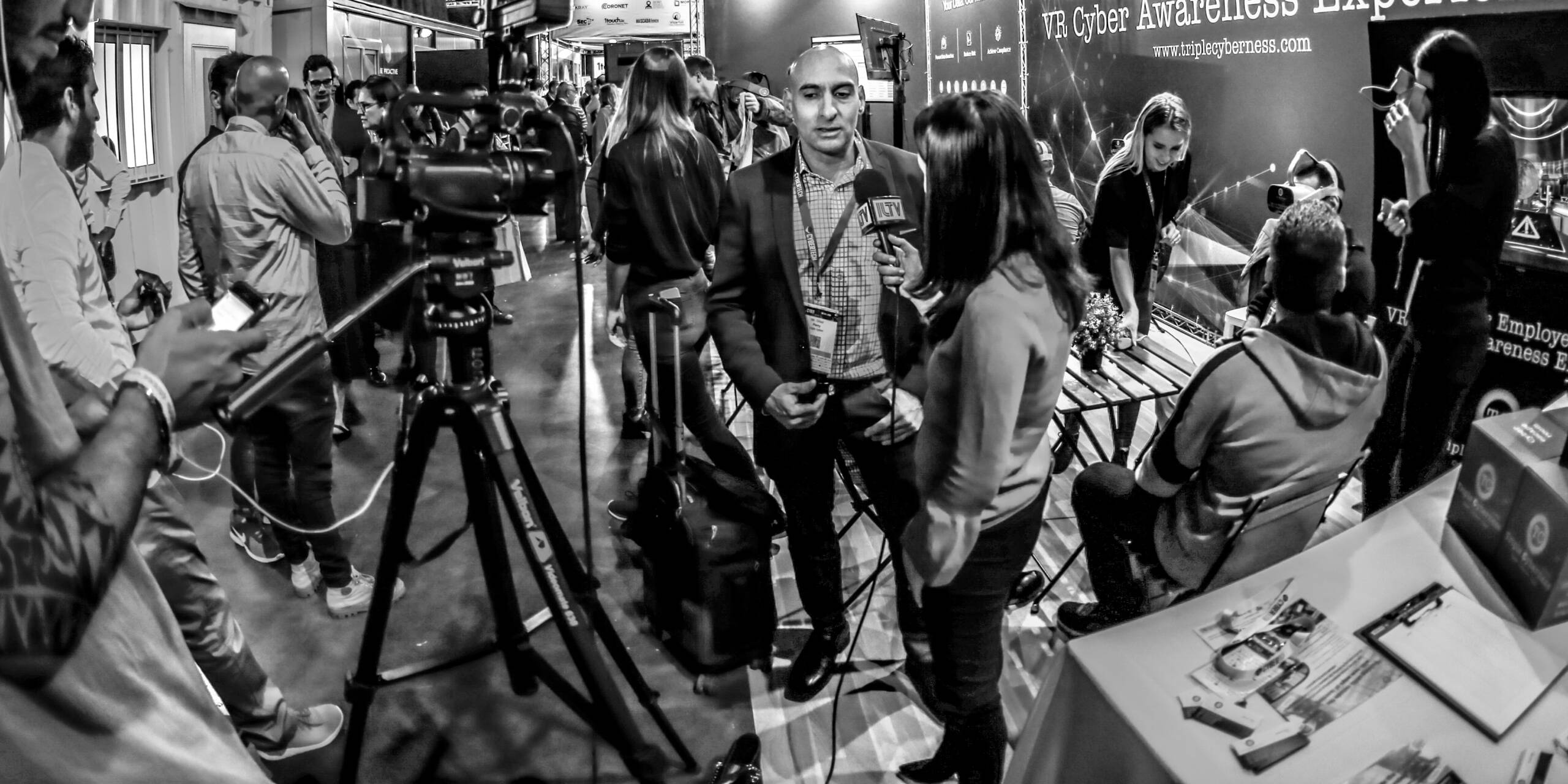
A crowded exhibition aisle, shot ultra-wide and converted to black and white. A man in a blazer with a lanyard is being interviewed by a reporter holding a network microphone. A broadcast camera operator and his tripod fill the left foreground. At the right is the backdrop of a “VR Cyber Awareness Experience” booth. A rolling case and a stack of giveaway boxes sit in the frame, and the lens bends the edges hard.
The Picture Exhibitors Can’t Take Themselves
Most trade show photography is of stands with nobody in them, or of people shaking hands in front of a logo. Exhibitors already have plenty of that from their own staff. What they almost never have is a picture of their company being covered by the press, taken from outside the moment by someone not involved in it.
That picture gets used. It goes on the company’s news page, into a LinkedIn post, into the deck the marketing team shows management to justify next year’s stand, and into sponsorship pitches. A frame like this one, with the broadcast camera, the mic and the booth name all readable, is worth more to that exhibitor than fifty wide shots of the hall.
Shooting It
Get close with a wide lens and put the broadcast camera in the foreground. The camera operator is what makes it read as press coverage and not two people chatting. Keep out of the TV camera’s line of sight and away from its microphone. You’re a guest in their shot, and a crew that has to stop recording because of you will remember it.
Ultra-wide lenses stretch anything near the edges of the frame. Faces placed there turn wide and strange. Keep the people who matter toward the middle and leave the edges for equipment, cases and the aisle. The booth name should be readable. Tilt slightly or step to one side until the lettering isn’t hidden by a shoulder.
Booth lighting is a mess of LED colours, often with a video light from the TV crew thrown in. Black and white takes that problem away and makes the frame about the event. Convert from raw and push contrast a little, because trade show halls tend to look flat.
Turn the Picture Into a Link
After the show, send the exhibitor a short email with a low-resolution preview and a link to where the picture is published. Offer free use in exchange for a photo credit that links back. Press and marketing teams are always short of images, and a good number will accept. It’s one of the few ways a photography site can earn links from company websites without paying for them.