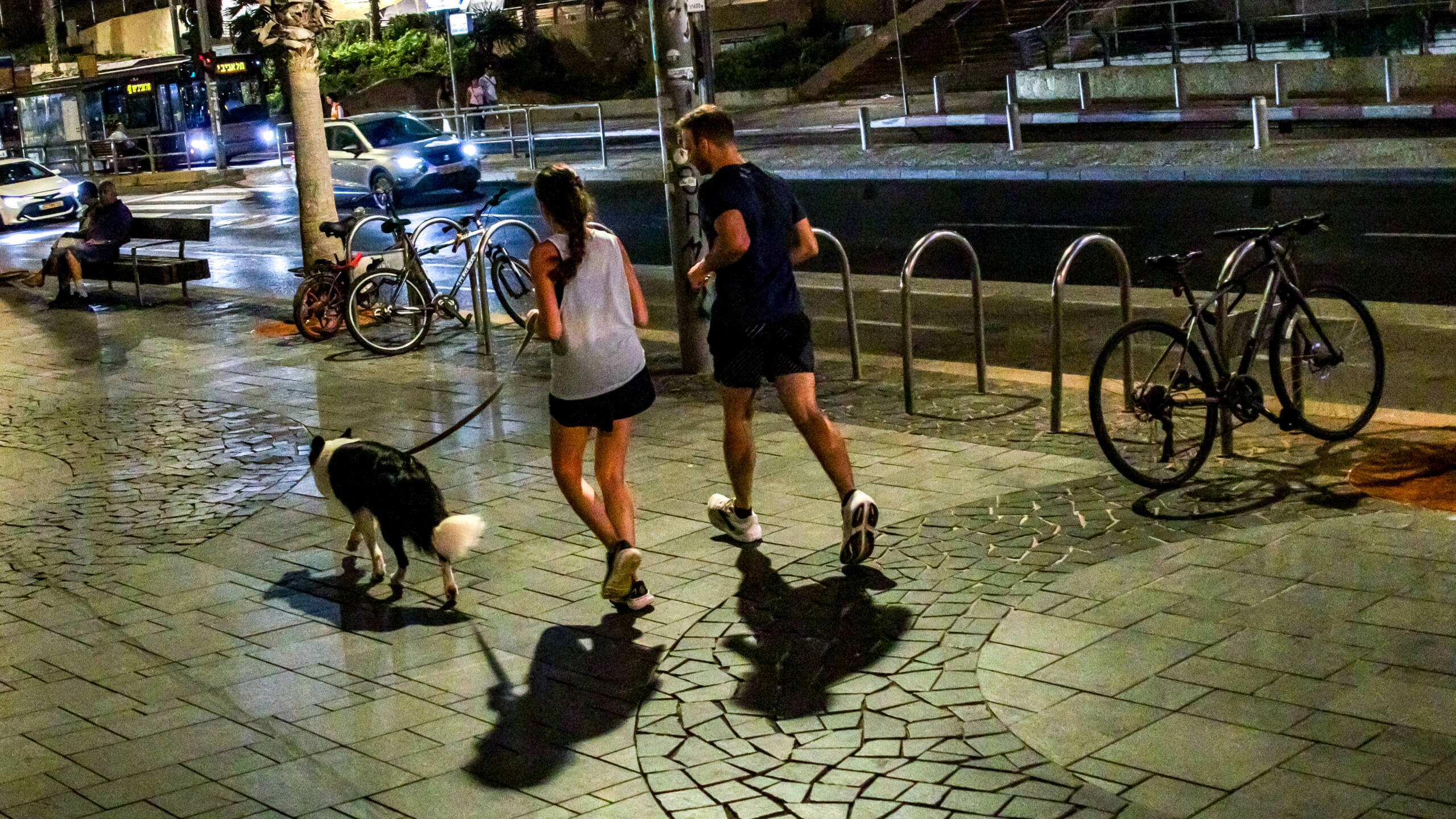
Two runners cross a wet plaza at night, seen from behind. A woman in a white tank top with a braided ponytail leads a black-and-white border collie on a leash, and a man in a navy tee runs a step ahead. A scarred metal pole stands between them, a row of chrome bike hoops recedes to the right, and a bus stop and headlight flare glow across the road. The light comes from … [Read more...] about White Balance in Mixed Street Lighting: Green, Blue and Orange Sources in One Night Frame
Blog
Trade Show Photography: Why the TV Interview in the Aisle Is the Frame Exhibitors Want
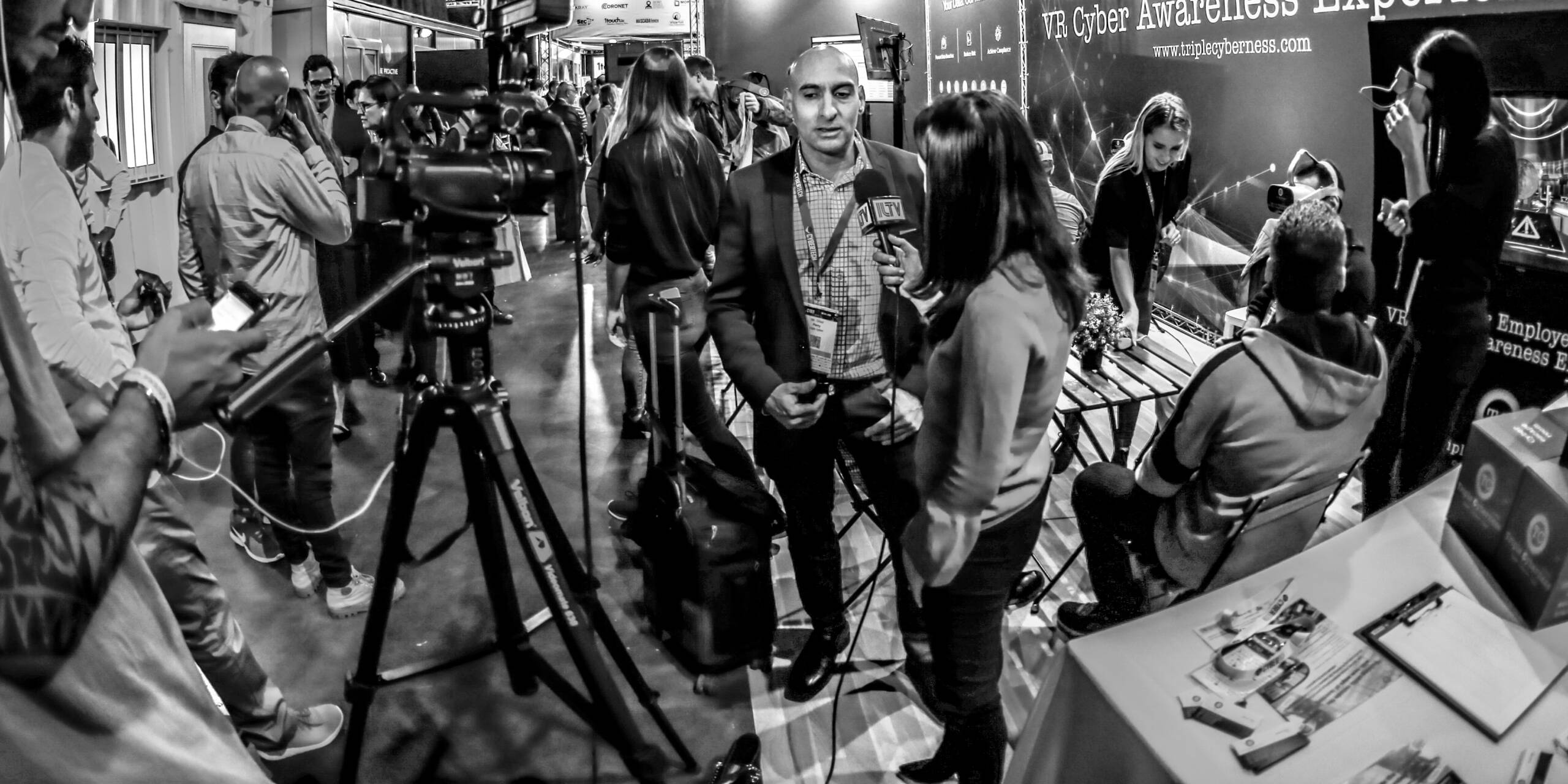
A crowded exhibition aisle, shot ultra-wide and converted to black and white. A man in a blazer with a lanyard is being interviewed by a reporter holding a network microphone. A broadcast camera operator and his tripod fill the left foreground. At the right is the backdrop of a "VR Cyber Awareness Experience" booth. A rolling case and a stack of giveaway boxes sit in the frame, … [Read more...] about Trade Show Photography: Why the TV Interview in the Aisle Is the Frame Exhibitors Want
Photographing Photographers at Events: Two Nikon Bodies, a Phone and a Press Credential
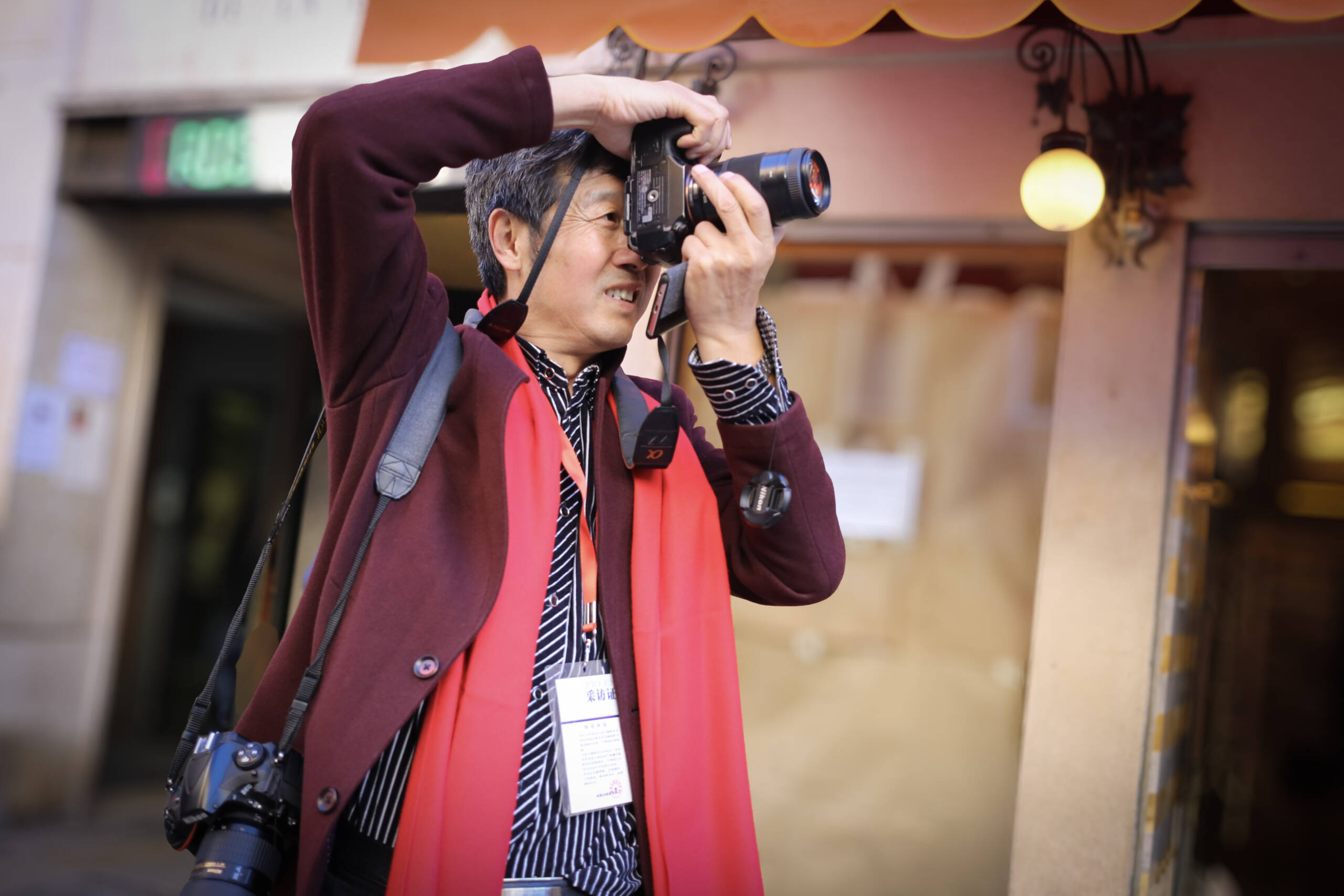
An older photographer in a burgundy wool coat and bright red scarf shoots a Nikon DSLR at eye level. His phone is still in the same hand, pressed against the camera body. A second DSLR with a long zoom hangs at his hip, a Nikon lens cap dangles from a keeper leash, and a Chinese-language press credential hangs from a lanyard around his neck. Behind him there's an orange … [Read more...] about Photographing Photographers at Events: Two Nikon Bodies, a Phone and a Press Credential
Photographing Bayonne From Pont Marengo: The Nive Quays and the Musée Basque in Winter Light
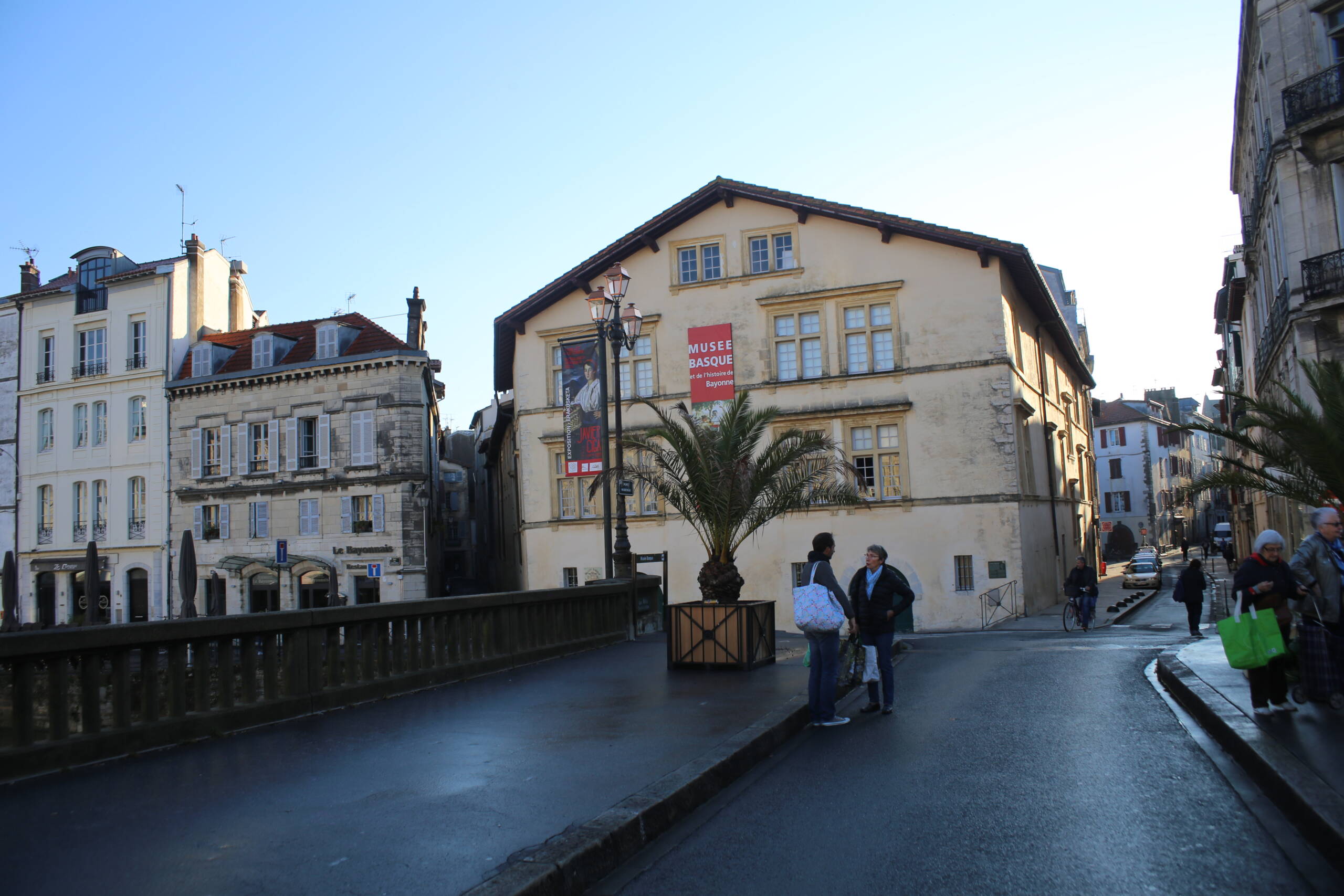
Pont Marengo crosses the Nive in Bayonne between Grand Bayonne and Petit Bayonne, and it's one of the best places in town to stand with a camera. This winter frame looks across to the Maison Dagourette on the Petit Bayonne side, the old merchant's house that holds the Musée Basque et de l'histoire de Bayonne, with an exhibition banner for the painter Javier Ciga hanging on its … [Read more...] about Photographing Bayonne From Pont Marengo: The Nive Quays and the Musée Basque in Winter Light
Francis Harburger Painted Paris Property Speculation as Birds of Prey in 1977
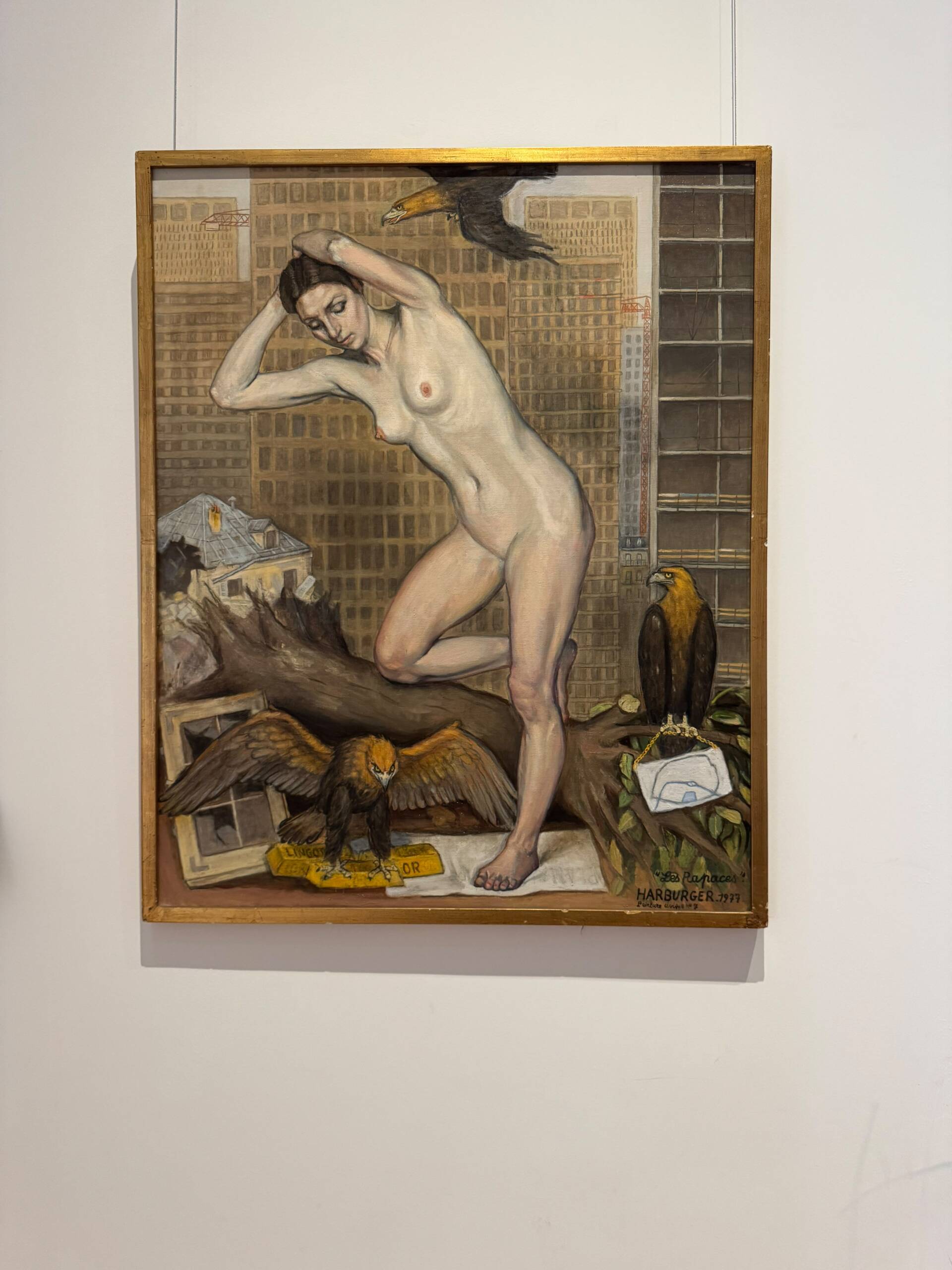
A naked woman stands in a heap of wreckage, one knee braced against a felled tree, three eagles working the air around her. Behind her the sky is filled edge to edge with office blocks, drawn flat and repetitive, the windows scratched in like graph paper. Two construction cranes sit in the gaps. There is no horizon. That is the whole of the picture, and it is signed HARBURGER, … [Read more...] about Francis Harburger Painted Paris Property Speculation as Birds of Prey in 1977
Photographing Vienna’s Neuer Markt Since the Cars Went Underground
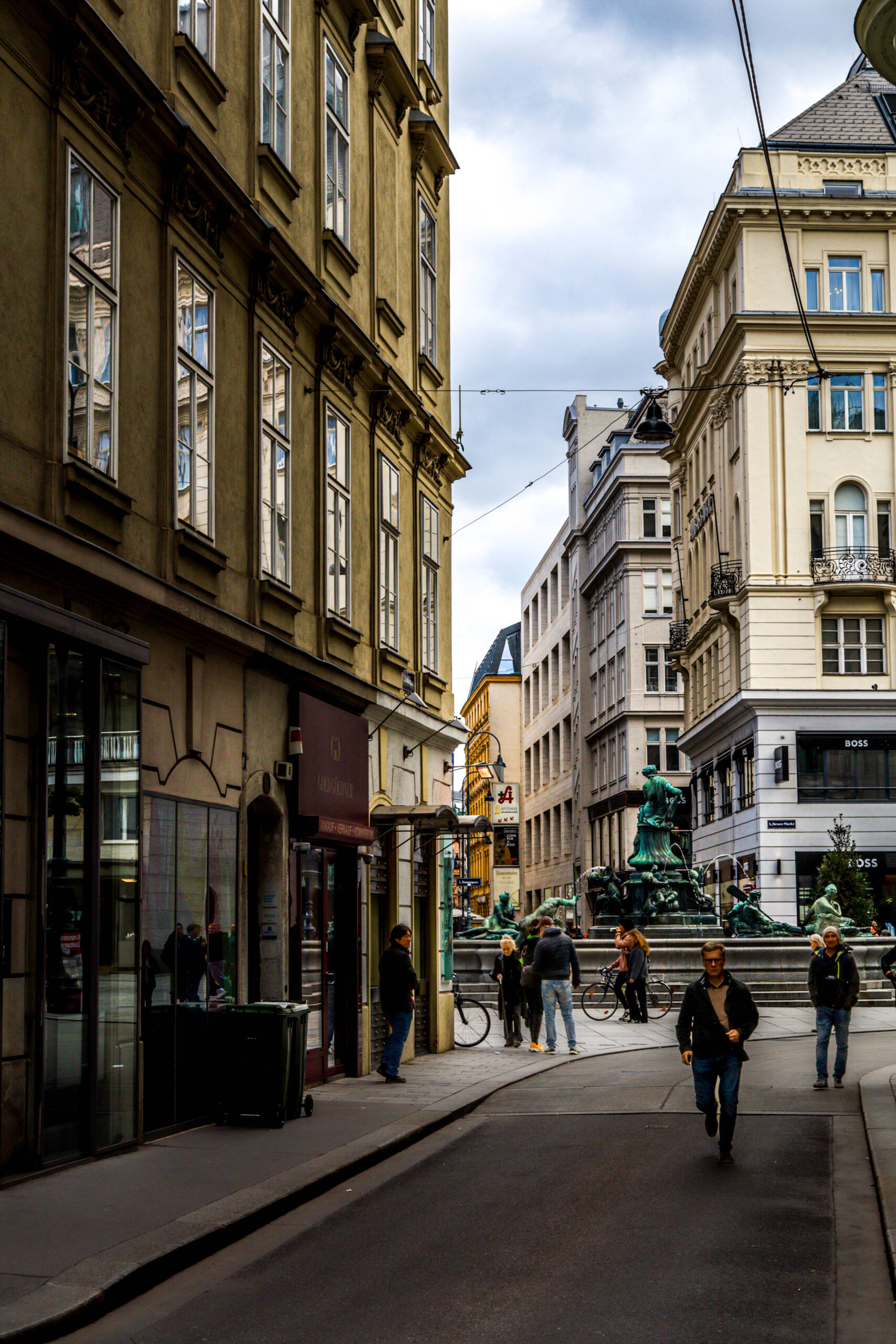
This vertical frame looks east down Plankengasse from the shade toward the sunlit Neuer Markt. An ochre façade and its window reflections fill the left side. The Gold Göldner shopfront and an Apotheke bracket sign mark the lane, and across the square the Donnerbrunnen fountain and a corner building catch full light. The dark asphalt of the lane meets the pale new surface of the … [Read more...] about Photographing Vienna’s Neuer Markt Since the Cars Went Underground
Photographing Puerta del Sol in Madrid: The Bear Statue, the Crowds and Hard Low Sun
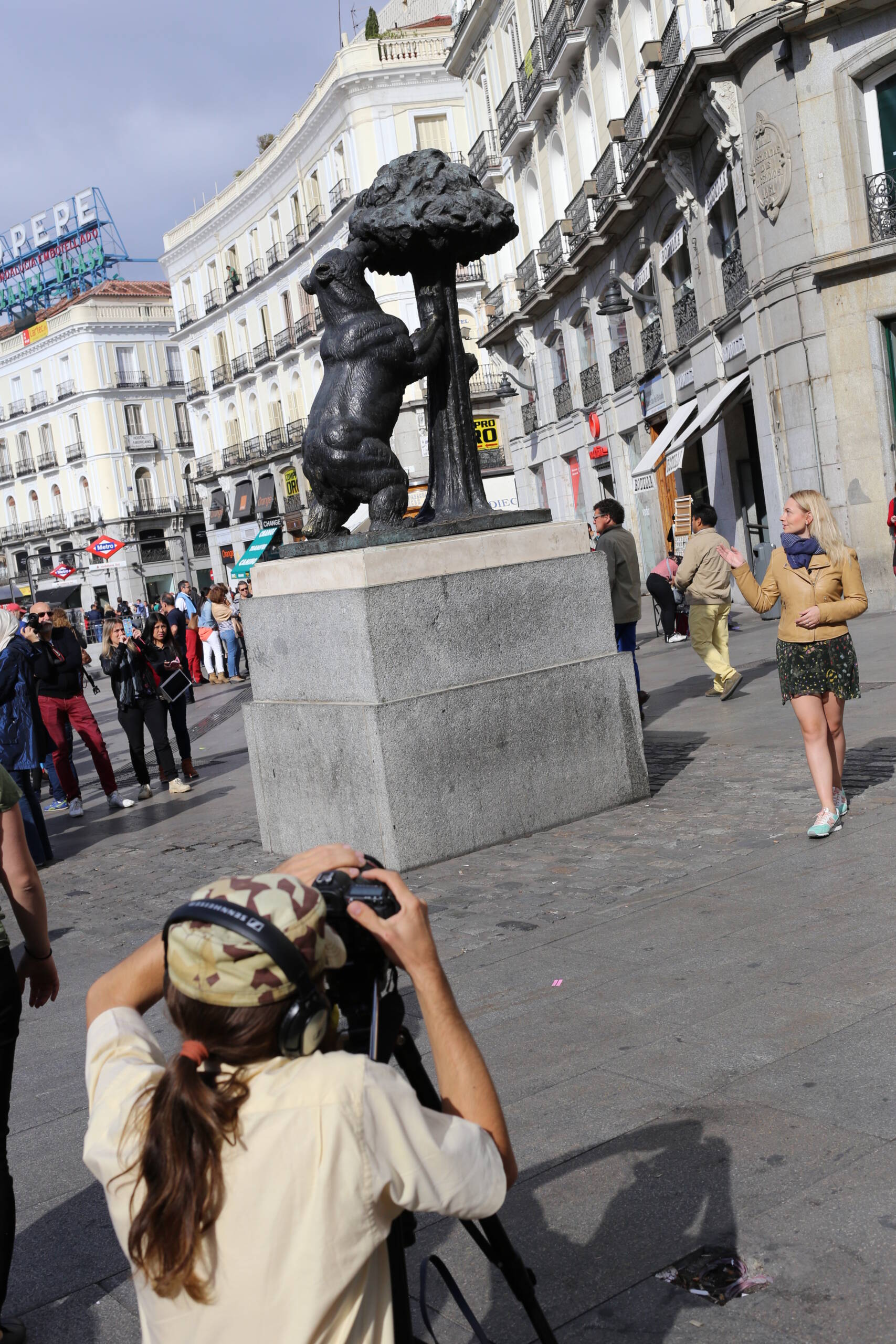
El Oso y el Madroño, the bear reaching up into a strawberry tree, is the statue everyone in Madrid uses as a meeting point. In this vertical frame it stands mid-picture on its granite plinth, with the curved façades of Puerta del Sol and a Tío Pepe sign behind it. In the near foreground a photographer in a camo cap works from a tripod with her back to the camera, and a woman in … [Read more...] about Photographing Puerta del Sol in Madrid: The Bear Statue, the Crowds and Hard Low Sun
Photographing the Prague Astronomical Clock at Night: Dial Lighting and the Bird Netting Problem
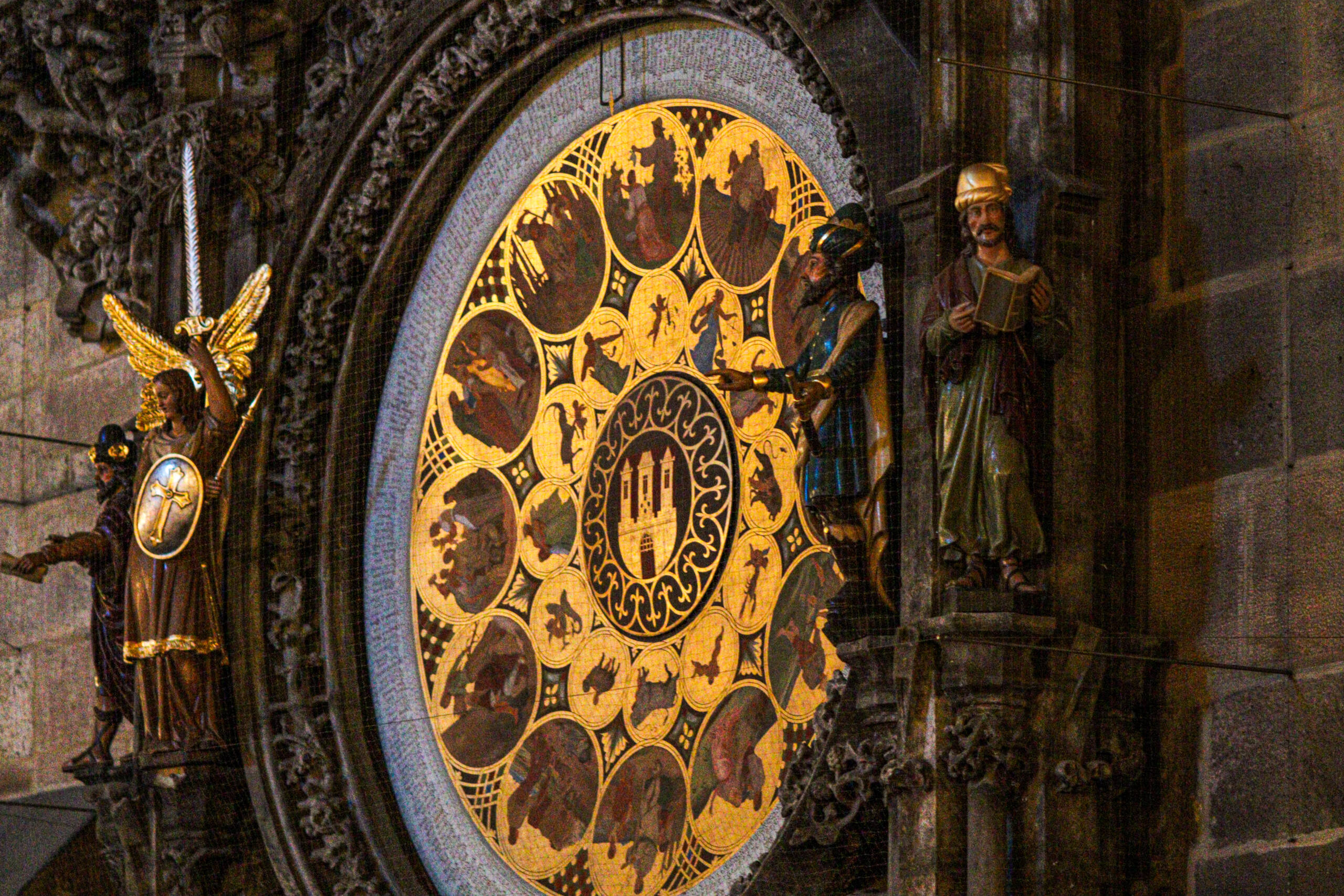
At night the lower dial of the Prague astronomical clock is lit warm against a dark tower. This frame takes in the calendar dial: the month and zodiac medallions around the edge, the Old Town coat of arms at the centre, the archangel with sword and shield standing to the left and the chronicler with his book to the right. Across the whole thing runs a fine mesh of anti-bird … [Read more...] about Photographing the Prague Astronomical Clock at Night: Dial Lighting and the Bird Netting Problem
Photographing Pena Palace in Sintra: The Terrace Shot, the Crowds and the Midday Sun
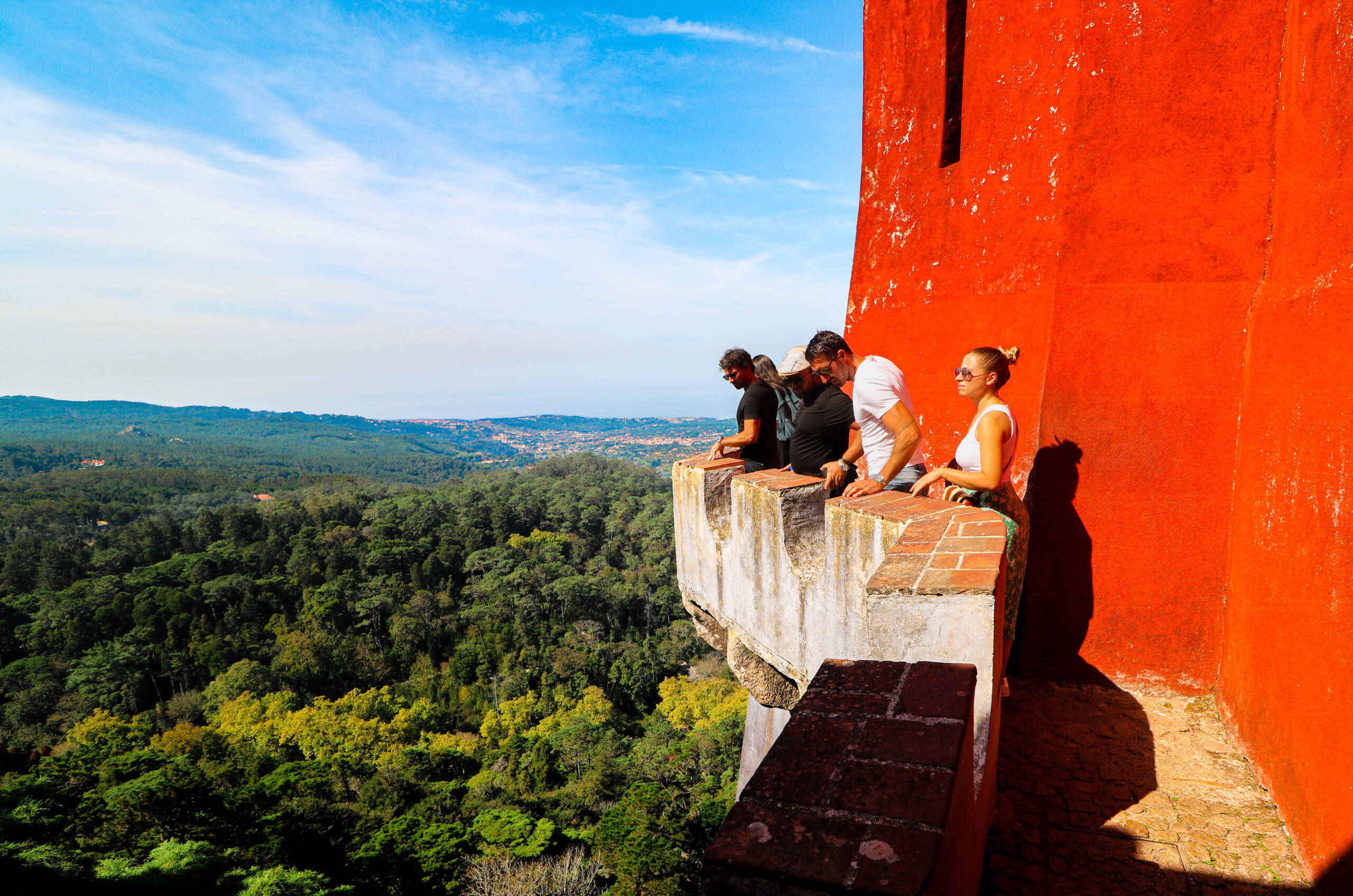
Pena Palace sits on top of the Sintra hills with its walls painted in flat blocks of red and yellow. This frame is from one of the terraces. The red rendered wall fills the right third and stops on a hard vertical edge. To the left, five visitors lean on a crenellated parapet with their backs to the camera, looking out over the forest toward the coastal plain. The sun is almost … [Read more...] about Photographing Pena Palace in Sintra: The Terrace Shot, the Crowds and the Midday Sun
Couple in Tracht Walking the Midway, Oktoberfest Munich
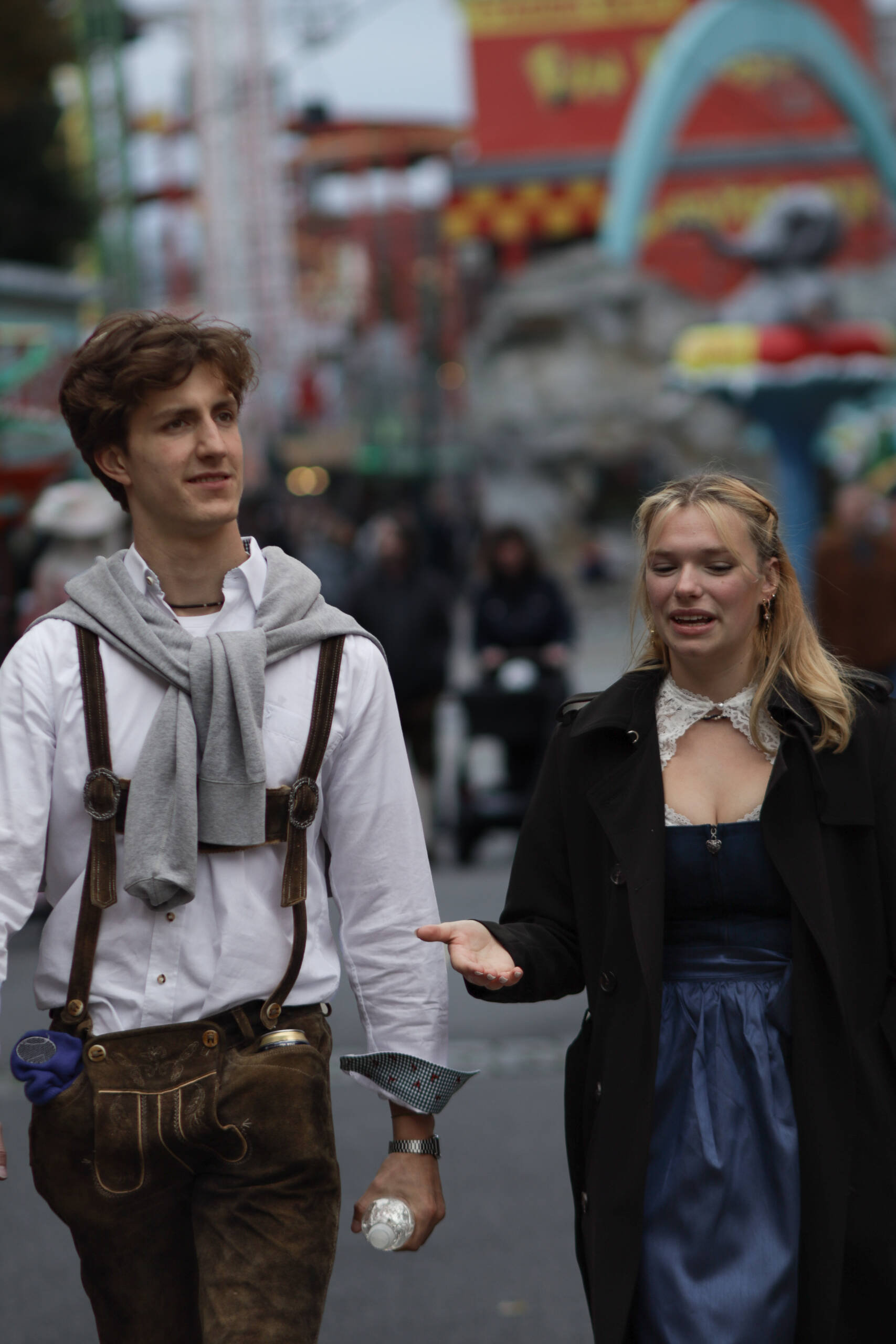
A candid telephoto shot on a fairground avenue, taken head-on at roughly chest height as two people in Bavarian dress walk toward the camera. The light is flat and grey, overcast late-afternoon, no shadows to speak of, which keeps everything soft and slightly cool in tone. The man occupies the left half of the frame. He's young, maybe early twenties, with thick wavy brown … [Read more...] about Couple in Tracht Walking the Midway, Oktoberfest Munich