• Skip to main content
  • Skip to secondary menu
  • Skip to footer

Pixel Effects

Pixel effects. Media gallery. Visual storytelling.

  • Sponsored Post
  • About
    • GDPR
  • Calendar
  • Domain Aftermarket
  • Contact

Freight in 2026: Record Rates, Zero Free Cash Flow, and the Costs That Never Move With the Market

August 14, 2026 By admin Leave a Comment

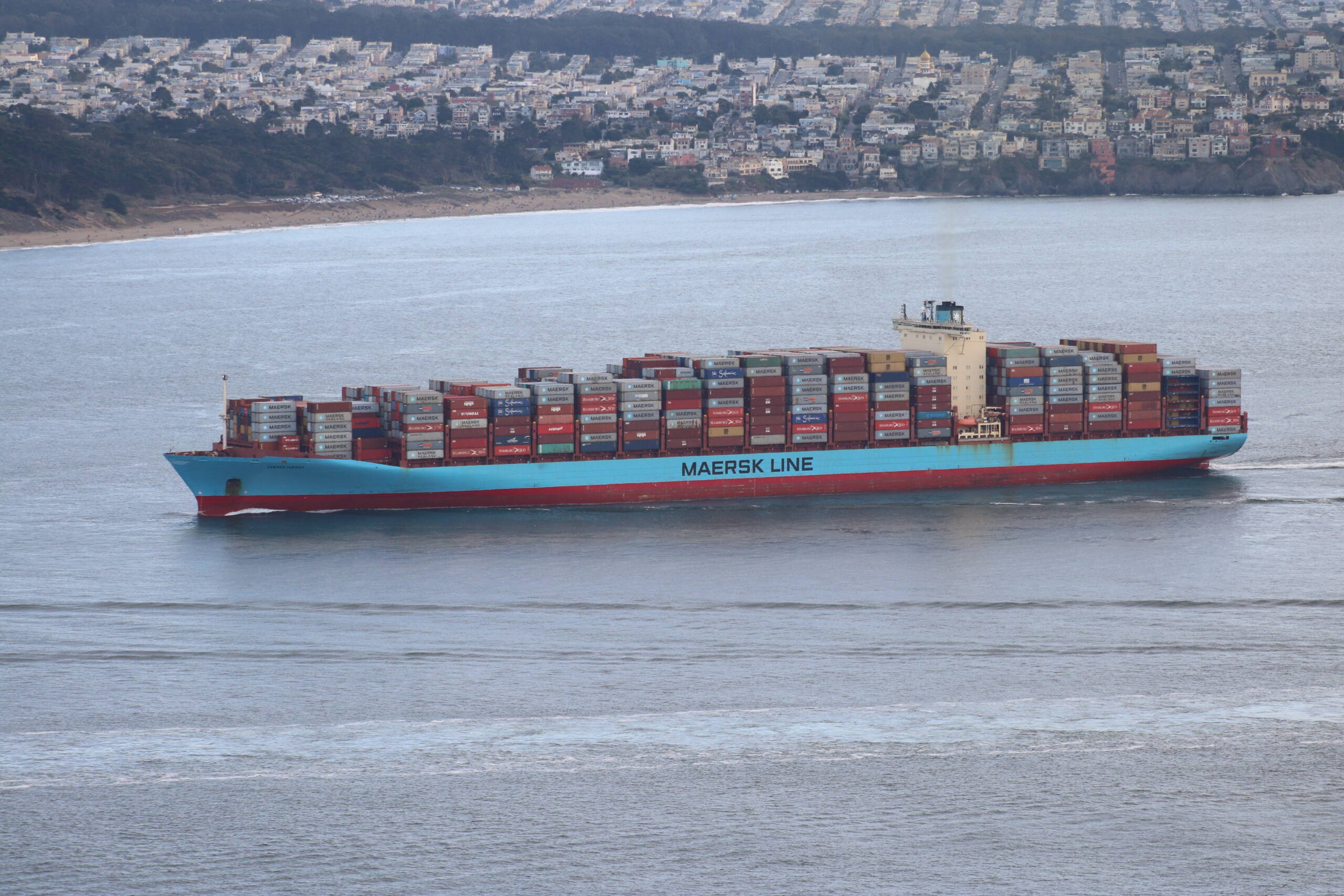
Container shipping is having one of its best earnings years on record and almost none of it is showing up as cash. That contradiction is the most useful lens on 2026, because it separates the part of the freight economy that reprices violently from the part that does not move at all.

Start with the clearest example. Maersk’s second quarter beat consensus badly and the company has now raised full-year EBITDA guidance three times, yet free cash flow still guides to roughly nothing. Earnings on this scale get consumed by the network that produced them. Longer routings burn more fuel and more ship-days, and the fleet and terminal spending that a rate spike triggers lands in the same year the spike does.

The rate side of the story is a chokepoint story. Closure of the Strait of Hormuz pushed Far East to U.S. West Coast spot rates 276% above their late-February level, on a trade lane that never passes anywhere near the Persian Gulf. That is what a chokepoint actually does: it does not raise the price of the water it occupies, it raises the price of tonnage everywhere by absorbing ships into longer loops. Ranking the world’s chokepoints by daily transit volume against the reroute cost each one imposes makes the mechanism explicit, and it excludes several famous straits that turn out to have cheap alternatives.
Freight in 2026

What is unusual about this cycle is that the price has outlived the disruption. Capacity on the two major East-West lanes has largely recovered while spot rates remain far above pre-crisis norms, which means the market has moved from a supply shock to a demand-and-surcharge regime. Some of that demand is artificial. U.S. container imports rose 8.2% year-over-year in June as importers front-loaded ahead of tariffs and war-driven cost increases, while first-half volumes were flat to slightly negative. Pull-forward is not growth, and the bill arrives on the other side of it.

The durable change is geographic rather than financial. Container traffic through Hormuz is further gone than tanker traffic, and Jebel Ali’s position as the default first call for the Middle East is what is actually being lost. Crude can move on a shadow fleet with transponders dark. A 19,000 TEU ship on a fixed weekly rotation cannot improvise. Once a service pattern relocates to the Gulf of Oman side, the shore infrastructure follows, and network positions restored after a war are not the same positions that existed before it.

Underneath the rate cycle sits a layer of cost that barely notices any of this. Towage and pilotage regimes price a low-probability failure and charge for it on every vessel movement regardless of conditions, which is why marine service fees quietly decide which ports win transshipment cargo. Berth allocation works the same way. Ports that run cruise turnarounds and container terminals out of one basin absorb real productivity losses that never appear as a line item. None of these costs fall when rates fall, which is precisely why they determine competitiveness over a full cycle.

Measurement deserves the same scrutiny as cost. A port reporting ten million TEU did not handle ten million boxes, and at some ports a large share of those units never entered the country. Normalising units are useful for comparing capacity and misleading for almost everything else, including the throughput figures that justify terminal investment.

Air freight is running the same demand-versus-capacity gap with a different driver. June air cargo demand rose 7% against supply growth of just 3%, powered by semiconductors and AI hardware rather than the e-commerce volumes that carried the sector for the past three years. Cost pressure is being fought on the ground, where Maersk Air Cargo joined BARIG to press German authorities on location costs and bureaucratic overhead. Same pattern as the ports: the mode is booming, the fixed charges are the fight.

Two smaller pieces round out the picture, and both are about assets doing work they were not designed for. A large share of the world’s livestock carriers began life as pure car and truck carriers, because a hull built for stacking vehicles converts more cheaply than a purpose-built ship gets ordered. Venice moves every physical object in its historic centre by hull, with road freight transferring to flat-decked barges at Tronchetto, which is a functioning intermodal system that happens to be nine hundred years old. Constraint produces the same engineering answer in both cases.

At the consumer end, consolidation continues on its own timetable. Uber’s €13 billion takeover offer for Delivery Hero, around $14.8 billion fully diluted, carries a premium of roughly 127% over the unaffected three-month average price. Last-mile platforms are buying density for the same reason liner carriers buy terminals: the network is the asset, not the vehicle.

The thread across all of it is that 2026 rewarded whoever controlled fixed capacity and punished whoever paid for it. Rates will normalise. Pilotage tariffs, berth conflicts, location costs and network position will not.

Filed Under: Blog

Reader Interactions

Leave a Reply Cancel reply

Your email address will not be published. Required fields are marked *

Footer

Recent Posts

  • Freight in 2026: Record Rates, Zero Free Cash Flow, and the Costs That Never Move With the Market
  • Chip Supply Chain Terms in the News: DUV, HBM, Entity List and What They Actually Mean
  • Shooting People Small: Scale and Negative Space on the Saone Quays in Lyon
  • Weekly Network Analytics: 65 Sites, 15.63k Visits, and a 431% LCP Regression
  • Weekly Diary: A Trade Show Floor, Three Whisky Bottles, and a Porsche 550 Spyder
  • Lyon Part-Dieu Is a Permanent Construction Site, and That’s the Most Honest Thing About Lyon
  • Fifteen: What the Tabs Left Behind
  • Turning AI Drafts into Real Work: Canva Expands Deep Integration with Anthropic’s Claude Design
  • Adobe Introduces Firefly AI Assistant, Turning Creative Workflows into Conversations
  • What the Sunglasses Saw

Media Partners

  • Referently.com
  • Briefly.net
  • ESN.net
Agentic Manufacturing Networks: How CAD MCP Servers and Instant Quoting Engines Are Closing the Design-to-Part Loop
Export Control Terms Every Chip Investor Confuses: EAR, Entity List, FDPR
Wall Street Trading Slang: The Language Traders Actually Use
Notre-Dame de Fourvière's West Front: The Basilica Lyon Built Because the Prussians Stopped Short
AI Sovereignty: Definition, the Four Layers, and Why Compute Is the Hard One
Cadence Q2: A $6.3 Billion Guide Raise on the Day Lithography Broke
China's Domestic DUV Line Cut ASML 7% — But DUV Was Never the Chokepoint
HBM Cannibalization Reaches the Laptop Shelf: What Framework's RAM Pricing Says About DRAM Contracts
Nvidia's $5 Billion SSI Stake and the GPU-for-Equity Loop Funding the AI Buildout
Apple's Chinese Memory Pitch Undermines the Supply Chain Nvidia Just Paid $500 Billion to Secure
Ninth Pass, No Particular Order
Balerion AI Raises $6 Million to Bring Agentic AI to Mortgage Origination
Live Nation and Ticketmaster Lose the Core Antitrust Fight
Why Prestige Drama Keeps Collapsing in Season Three
The Newsletter Bubble and Who Survives It
Peak TV Is Over — What Comes Next
Why Startup Valuations Haven’t Fully Reset
What the Fed’s Patience Is Actually Signaling
Dollar Dominance: Slow Erosion or Cliff Edge?
The Cloudflare CMS Bet and What It Signals
SanDisk (SNDK) Buyback: The $4.5 Billion Already Spent Sits Above Today’s Share Price
IonQ’s $58M DARPA Clock Opportunity Is Bigger Than It Looks
Strategic Analysis: Why Munition Constraints Alter the Bargaining Table—Not the Outcome—in the Strait of Hormuz Crisis
BitMart Shuts Down as X Money Offers 6% and Kalshi Wins in Minnesota
NBCU Puts All Peacock Content Into YouTube Premium Starting Early 2027
Alphabet Q2 2026: The $85bn Bet Wall Street Hasn’t Priced
Eleven, and the Feed Keeps Refilling
The $931 Million Insider Signal the Quantum Bubble Can No Longer Hide
TechSummit.net
Why We Love Orchids

Media Partners

  • ZGM.org
  • JVQ.net: Just Very Quick
  • k4i.com
Singapore's GDP Upgrade and CoreWeave's $104 Billion Backlog: The AI Boom Has Reached the Lagging Indicators
SanDisk (SNDK) $4,000 Price Target: The Case Rests on the Multiple, Not the Earnings
ADBE Two-Month High on Topaz Labs FTC Clearance: A Sub-$1 Billion Tuck-In That Buys Gross Margin, Not Features
A Ban on Chinese Open Models Would Fail, and Kimi K3 Just Proved It
AI Wrote the Pickup Line and Google Indexed the Conversation
Together AI Raises $800M Series C at $8.3B Valuation to Scale Open Source Inference
Technology, Finance, and Smart City Events: Selected Global Calendar, 2026
Two Signals, One Crisis
House Democrats Urge Mike Johnson to Restore Bipartisan Smithsonian Women’s History Museum Bill
Borders, Memory, and the Future of European Identity
Container Shipping in 2026: Chokepoints, Rate Spikes, and the Port Costs Nobody Quotes
I Ran Six Static Site Generators on the Same 400 Posts. Build Time Wasn't the Differentiator.
Trade Show Floor Photography: Isolating One Conversation in a Crowded Hall
Contrails Over the Grand-Place: The One Part of Brussels Nobody Preserved
BCG's Intelligent Cities Index 2026 Ranks London, Dubai, New York on Top
What Was Still Open at the End of the Week
Five Minutes of Everything at Once
New-Tech Exhibition 2026, 30.06-01.07.2026, Tel Aviv
Valerian for Stress: Weak Evidence, Mild Risk, Oversold Promise
AI’s Next Market Shockwave Is Coming: AMD, Broadcom, and NVIDIA Earnings Are Around the Corner
SanDisk (SNDK) and Kioxia's 9th-Generation QLC NAND: A 33% Faster Die That Adds No Bits
JPMorgan's July CPI Scenarios: The S&P 500 Flips Sign at a 0.25% Core Print
BofA Lifts Memory Forecasts to $573bn in 2026 DRAM Sales as Legacy DDR4 Spot Trades 69% Above DDR5
Cloudflare (NET) Q2 2026: Cost of Revenue Grew 53% Against 36% Revenue Growth
AMD Q2 2026: The Gross Margin Guide Stayed at 56% and the Stock Lost 8%
SanDisk Fiscal Q4 2026: Why $1.38 Billion in Costs Matters More Than $8.97 Billion in Revenue
Palantir Q2 2026: The $6.24 Billion Backlog Number Matters More Than 93% Revenue Growth
China DUV Breakthrough Hits ASML, AMAT, LRCX and KLAC: Five Machines Against a 7% Drawdown
CXMT STAR Market Debut: The 6.7% Float Behind the 500% Pop
SK Hynix's 51% ADR Premium Is Exactly Why I Don't Own Korean Memory Stocks

Copyright © 2022 PXEF.com